


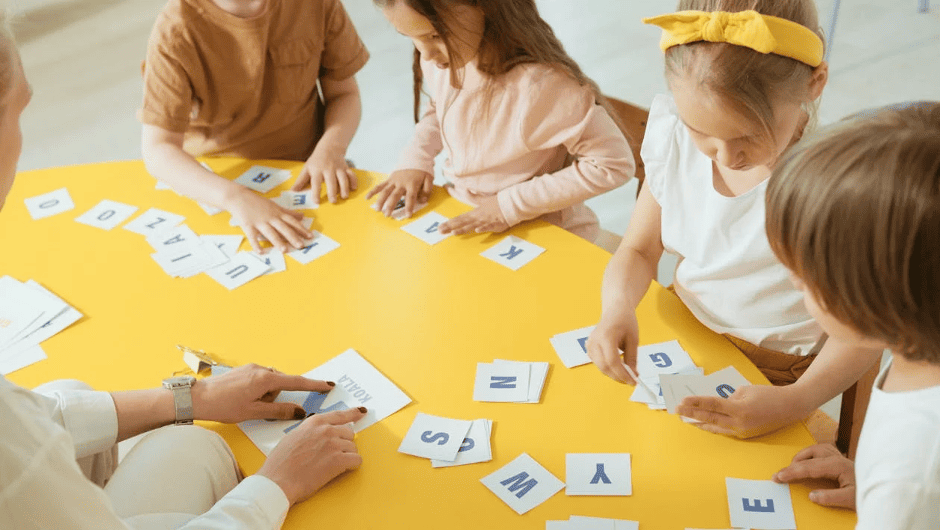
Movable furniture is one of the most underrated tools in modern classrooms.
Schools are transforming their students’ learning entirely, simply by replacing traditional desks with mobile, foldable, stackable and shift-able furniture. With just a tweak in the layout, you can:
- Boost student collaboration
- Free up valuable floor space
- Make group projects easier to run
And use the same room for a dozen different lessons in the same week.
Here is how it works…
Table of Contents
Here’s what’s coming up:
- Why Movable Furniture Matters In Modern Classrooms
- The Link Between Furniture & Project-Based Learning
- Top Benefits Of Open Classroom Storage
- How To Build A Flexible Learning Space
Why Movable Furniture Matters In Modern Classrooms
The old style classroom (rows of desks, bolted down shelving, teacher up the front) is dead.
Why? Because learning happens differently these days. Lessons move from group work to independent activity to whole-class discussion in the course of an hour. A fixed room resists that flow. A flexible room enhances it.
When teachers can reconfigure space quickly, they align the room to the lesson. Not the lesson to the room. The research supports this. Students who were learning in flexible learning spaces spent more time in collaborative learning, interacting with peers, and were observed as actively engaged when compared to students in traditional classroom settings.
That’s where clever open classroom storage steps in. Instead of cramming everything behind cupboard doors, progressive schools are using mobile school tray storage that can be wheeled where it’s needed. The trays are open, labelled, and accessible to children. The unit itself wheels into the middle of a group activity, then back to the wall when the lesson ends.
It sounds small. But the impact is massive.
Why Flexibility Wins
Imagine a science lesson. One minute the children are watching a demonstration. The next, they break into pairs to test a hypothesis. Then they reassemble to share results.
In a fixed room, it is a logistical nightmare. In a flex room, it takes 60 seconds.
The result?
More time spent learning. Less time spent rearranging the room.
The Link Between Furniture & Project-Based Learning
Project-based learning (PBL) is a learning approach in which students gain knowledge and skills by working for an extended period to investigate and respond to an authentic, engaging and complex question, problem, or challenge.
Sounds great, right?
Here’s the problem. PBL takes room. Lots of room. Students are building stuff, spreading out research, collaborating in groups and stashing materials between classes. A room with bolted down desks is not an option.
The statistics speak for themselves. In a 2024 Gallup survey, 46% of Gen Z students reported that their motivation to learn is fueled by hands-on approaches. Hands-on requires physical movement. Classrooms have to adapt to the mobility demand.
Movable furniture makes PBL actually possible in a normal-sized classroom. Here’s why:
- Quick group formation: Tables on wheels mean teams can be reshuffled in seconds
- Project storage: Mobile trays let half-finished work sit safely between sessions
- Display space: Boards on castors can show off work without cluttering the walls
- Defined zones: Movable shelving creates “rooms within rooms” for different teams
Kids get back to the important stuff… The learning. When the furniture steps up for the project.
A Real Classroom Example
Picture a Year 5 class running a four-week project on local history.
Week 1, the room is a library with rolling trays full of books. Week 2, some groups hunker down to write in the corners and some groups construct models. Week 3, the room becomes a stage for presenting information. Week 4, the room opens up for parent gallery day.
Four totally different setups. Same furniture. Same classroom.
Top Benefits Of Open Classroom Storage
Open storage is the secret weapon that makes the flexible-classroom thing actually work…
Easier Access For Students
If students can see what is available, they will use it. Drawers keep resources hidden. Open bins display them. This fosters independence as children access what they need without interrupting the teacher every five minutes.
It also allows for faster transitions. The study found that students in flexible spaces experienced higher levels of behavioural engagement, partially due to the time saved setting up.
Supports Different Learning Styles
No two children learn the same way. Some need to be on the move. Some need to see things. Some need to use materials. Open mobile storage provides learners with what they need, when they need it.
You can stock trays with:
- Reading materials for visual learners
- Manipulatives for hands-on learners
- Quiet activities for kids who need a break
- Group resources for collaborative tasks
Each tray is its own little toolkit.
Keeps Classrooms Tidy
This one is so underrated.
A cluttered classroom is a stressful classroom. Open trays with visible labels tell children where things belong. Mobile units tuck neatly against the wall when the day ends. The room comes back to zero in minutes.
How To Build A Flexible Learning Space
So you want to give this a go. Where do you start?
You don’t have to gut the classroom and start from scratch. The smart move is to incrementally increase flexibility.
Start With Storage
Mobile tray units are the simplest solution to start with. They’re low cost, fit in any classroom and they make a big impact from day one. Choose units with locking castors, so they don’t move when you don’t want them to.
Add Movable Tables Next
Replace some fixed desks with rolling tables. As few as two or three of them gives you more arrangement possibilities. Trapezoidal tables are especially nice since they tessellate in many configurations.
Bring In Soft Seating
A few floor cushions, a beanbag or a low bench gives students choice. In one classroom study, 88% of students felt new modern furniture had helped them learn after just three months.
Train The Teachers
Furniture doesn’t make a classroom better. The teacher must know how to use it. Spend five minutes demonstrating layouts. When teachers experience how simple it is, they won’t return to their old ways.
Final Thoughts
Movable furniture is not a luxury, it’s a necessity. It’s an integral part of the way we operate classrooms today.
Flex rooms can accommodate group work, project-based learning, and independent study without requiring separate classrooms for each. In a nutshell:
- Movable furniture supports the way kids actually learn today
- Open storage gives students independence and saves time
- Mobile units let one classroom do the work of three or four
- Project-based learning needs flexibility to thrive
- Small changes (like mobile trays) have a huge impact
Schools that are getting it right are reporting higher engagement and smoother teaching. The future classroom isn’t high-tech. It’s simply more flexible.
