


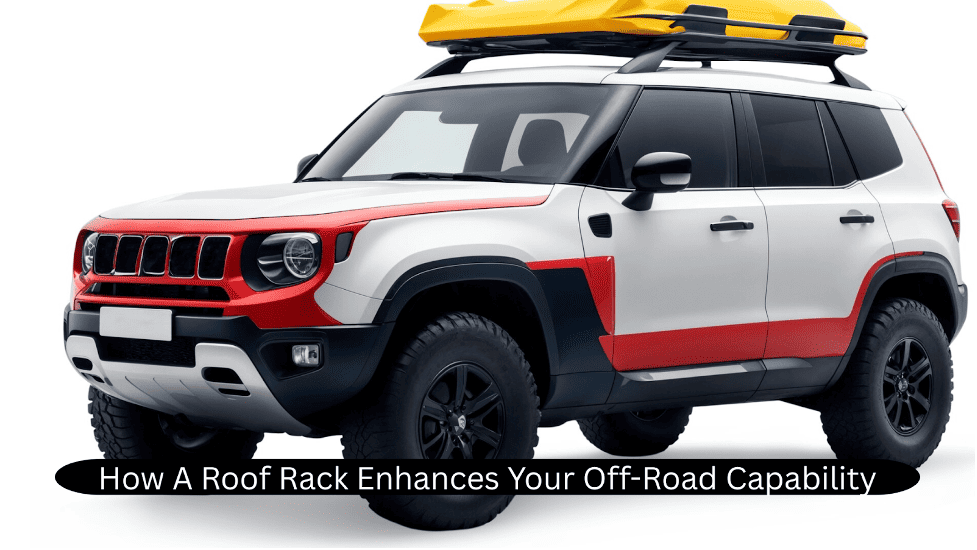
Your roof rack can be the best upgrade of your lifetime. When you are off-road, your car is all you have for transportation, a base camp, or a survival tool.
Out there, you need good storage, balance, and fast access to your gear. These aren’t nice-to-haves. They are essential for keeping you safe in rugged terrain.
When used properly, a roof rack alters your packing style, your travel, and the way you deal with the wild. Here is a deeper look at how it enhances off-road capability.
Table of Contents
1. More Cargo Capacity in Off-Road Adventures
A roof rack provides you with a lot more space. Off-road gears are bulky and awkward. These could be sand boards, spare tires, traction mats, or a high-lift jack. None of that belongs inside.
Move it to the roof, and the problem is solved.
The muddy spare tire ruins your interior and takes up space that passengers, food, and electronics could use. Mount it on top, and you will keep the cabin clean.
That said, an effective vehicle-specific system, such as a 4Runner roof rack, uses every inch of your roofline. Load it perfectly, and you evenly distribute the weight in the chassis.
Your rear suspension stays flat, rather than drooping with a trunk full of gear.
2. Better Organization and Gear Accessibility
Off-road situations cannot be predicted. When you are stuck in deep mud or sand, you do not want to spend time hunting for a shovel or a tow strap in a pile of duffel bags.
A roof rack will ensure gear is organized much better and that important recovery gear is visible and within reach.
With modular accessories, you can build a personalized storage ecosystem. Examples of roof rack attachments are:
- Quick-release mounts: Ideal for shovels, axes, and high-lift jacks so that you can get the tools in use within a few seconds.
- Cargo baskets and boxes: These are perfect for keeping out the weather, such as a sleeping bag and dry goods.
- Heavy-duty tie-downs: Ensure jerry cans or rough storage boxes are tied down.
This level of organization will save you time on unloading and repacking at each trail stop, get your drive going, and keep your focus on the drive.
3. Supporting Overlanding and Extended Trips
If you are looking for day trips, that’s easy. Pack the trunk and go.
But with multi-day overlanding, you bring along a little home with extra gear: water, fuel, and heavy supplies. Everything you need will support you for extended miles.
This is possible with a good roof rack. It forms part of the long journeys. Better still, it establishes a mobile base camp.
Install a fold-out awning to provide a shady area and protect from the weather. Install a rooftop tent, which allows one to sleep high, out of reach of predators, rocks, and rugged terrain.
Lifting this equipment to the roof makes your cabin more comfortable and relaxing. You will like that on long driving days.
4. Improving Vehicle Versatility and Customization
There are no two off-road adventures that are similar. A rock-crawling trip on the weekend will require an entirely different set of gear than a two-week overlanding trip across the desert.
A roof rack will increase your car’s flexibility, serving as a blank canvas you can customize for your trip. Since contemporary racks have T-slots and modular slats, it is easy to change accessories.
In winter, it can take ski mounts and traction board pins. In the summer, it is simple to replace them with kayak carriers and a rooftop tent.
This adaptability will allow you to personalize your setup based on your unique driving style and vehicle build.
5. Safety and Vehicle Protection Benefits
The trail safety extends much beyond a seatbelt. Unsecured interior cargo can be fatal when you are rolling over rocky terrain or skimming down steep slopes.
A massive camp cooker, a metal toolbox, or a hardened recovery board may become a lethal projectile during an accidental halt or a car crash.
You will significantly improve passenger safety by removing this heavy equipment from the cabin and placing it on the roof rack.
It also does not allow heavy, rough equipment to rip upholstery or smash windows inside out.
Key Considerations When Choosing a Roof Rack
Roof racks are of immense benefit. However, when you put hundreds of pounds on your roof, your car no longer drives the same way.
Know your load limits. The weight of the rack when parked is called the static weight (significant when using rooftop tents). Its weight is dynamic as it is in motion.
Your car may be capable of carrying 300kg when parked, but only 50kg to 100kg when in motion. Bumps and ruts on the off-road add to the stress.
Experts indicate that reducing the dynamic load by half on rough surfaces prevents roof failure.
Aerodynamics matter too. A roof rack that carries loads generates drag. Fuel consumption increases by approximately 18% at highway speeds.
Conclusion
A roof rack is an accessory that allows you to do more off-road. Talk about larger cargo space, organization, and space to have awnings and rooftop tents. You confidently venture deeper into the wild.
But you need to use it right. Stabilize the weight, pack smart, and cope with the ground. Do it, and your rig is stable, secure, and ready to take it on. Gear up and get out there.
