


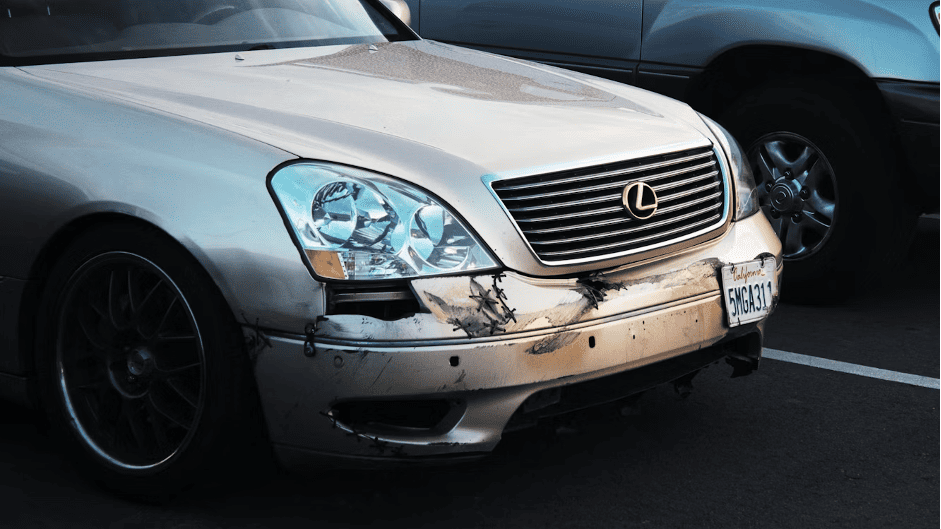
You have a scratched bumper. A cloudy clear coat. A fading door panel. Or perhaps some crept through chips that are beginning to rust.
So what do you do?
For a lot of car owners, the first move is the same…
Pull up a YouTube tutorial and try to fix it at home.
There’s a multi-billion-dollar business selling DIY car refinishing products. Spray cans, rubbing compounds, scratch pens, polishing pads, even entire “garage paint kits.” It sure sounds like a great way to save some cash. And for minor cosmetic flaws, it kind of is.
But here’s the truth:
Refinishing may be the most technical job in the entire auto-repair field. Proper body shops spend tens of thousands on paint booths, lighting rigs, computerized colour matching devices and industrial spectrophotometers for good reason. The best home DIY spray equipment can’t compare to what a real body shop can offer. It’s way more technical than what you see in a 10 minute YouTube video in your garage.
When it’s more than just a small, clear coat stain or DIY paint scratch removal touch-up, professional car paint repair will typically yield a superior, more durable result — and help maintain your car’s value.
Here’s exactly why.
Table of Contents
In this guide you’ll find:
- What Refinishing Actually Involves
- Where At-Home Solutions Fall Apart
- The Resale Value Argument
- When DIY Is Acceptable (And When It Isn’t)
- What Pro Shops Bring To The Table
What Refinishing Actually Involves
Most people hear “refinishing” and picture a guy spraying paint on a panel.
That’s not even close.
A quality refinish is a process that takes several steps to return damage to like-new quality. Standard refinishing includes:
- Surface cleaning and de-greasing
- Sanding to feather damaged edges
- Filling and priming where needed
- Computer-matched base coat application
- Multiple clear coat layers
- Wet sanding and machine polishing
It all starts with the step preceding it. Skip the preparation and the paint won’t adhere. Mix the colour incorrectly and the panel will scream “HEY I’M FAKE!”. Rush the clear coat and your finish will degrade in a matter of months.
Refinishing also covers a wide range of damage — not just paint scratch removal:
- Stone chips
- Bumper scuffs
- Clear coat oxidation
- Door dings
- Sun-faded panels
- Full panel resprays
The right approach changes for each type of damage.
Where At-Home Solutions Fall Apart
DIY refinishing kits make some big promises.
“Professional-grade results in 20 minutes.”
“Looks like new again.”
“No special tools needed.”
Sounds great, right? Here’s what tends to actually happen.
1. Colour matching is never exact. Today’s paints are very rarely a solid colour. Most finishes have metallic flakes, pearl pigments or tri-coat application. Spray cans and touch up pens simply can’t reproduce that complexity. Expect patch that is darker, lighter or duller than surrounding areas.
2. The environment destroys the finish. When you spray paint in the driveway, dust, pollen, insects and humidity settle on the wet paint. Every particle leaves a defect that must be sanded out later — or maybe even destroyed beyond repair.
3. Layer thickness is wrong. Paint must be applied in thin layers with the proper flash time in between applications. Incorrect layering will cause the finish to orange-peel, sag or crack within weeks.
4. Clear coat is applied brutally. You need enough layers, correct ratio of hardener, and adequate cure time to achieve a proper clear coat. If you mess any of that up you lose UV protection from your finish. Meaning it’ll fade quickly.
And here’s the kicker:
Industry statistics indicate professional repairs range from $945 to $5,000+, warranted. DIY will set you back $150 – $300, with no assurance.
The bill is lower with DIY. The result almost never is.
The Resale Value Argument
This is where most at-home fixes really sting.
Bad refinish doesn’t just look terrible – dealers, appraisers, and buyers recognize it as “visible damage.” Visible damage can drop a car’s worth by up to 10%, which can cost you $2,000 or more on a $20,000 vehicle.
It only gets worse with newer cars as well. Owners of some 2026 trucks found themselves losing $3,000 to $5,000 in resale value after paint damage was discovered during a vehicle history report.
Here’s the lesson:
Pro refinishing — including booth work and proper colour matching — will get you back to factory grade finish. DIY will almost never achieve that standard. It costs real money when you trade the car.
When DIY Is Acceptable (And When It Isn’t)
To be fair, at-home solutions do have their place.
DIY can work for:
- Light marks you can’t feel with a fingernail
- Clear coat hazing from automatic car washes
- Tiny chips in non-visible areas
- Older cars where appearance isn’t critical
DIY is a bad idea for:
- Anything deeper than the clear coat
- Metallic or pearl-pigment panels
- Lease vehicles (end-of-lease inspections are brutal)
- Newer or higher-value cars
- Anything that could affect resale
Why should you care about leased vehicles? Damage fees at the end of a lease are more expensive than most refinishes would have been originally. Cutting corners now will cost you later.
What Pro Shops Bring To The Table
Here’s what people don’t see from outside a body shop:
- A climate-controlled, dust-free paint booth
- Spectrophotometers that scan your panel’s current colour
- Manufacturer-approved paint and clear coat systems
- Industrial-grade infrared curing lamps
- Skilled technicians with years of training
Contemporary paint is applied with tinted clear coats and colors contain special pigments that are not available in home repair kits. Vehicle paint also fades as time goes on — the paint color code on the door sticker may no longer be correct. Spectrophotometers analyze the existing paint and formulate an exact match.
You’re not getting that from a $25 spray can.
There’s also the warranty to consider. Most professional refinish work is warranted for life. DIY is sold with a wing and prayer.
Bringing It Home
Refinishing looks easy from the outside.
A spray can, a polishing pad, 20 minutes of effort — problem solved, right?
Not quite. DIY refinishing seldom equals professional quality. Colors can turn out funny. Clear coat prematurely fails. Repair is obvious when selling.
Here’s the simple takeaway:
- Light clear coat marks on older cars? DIY is fine
- Anything that touches the colour layer? Get a pro
- Anything on a leased or newer car? Always get a pro
- Anything that could hit resale value? Always get a pro
Pro refinishing isn’t about getting fancy. It’s about preserving your vehicle’s appearance — and value. Consider resale value and cost to redo…
The pro wins. Every time.
