


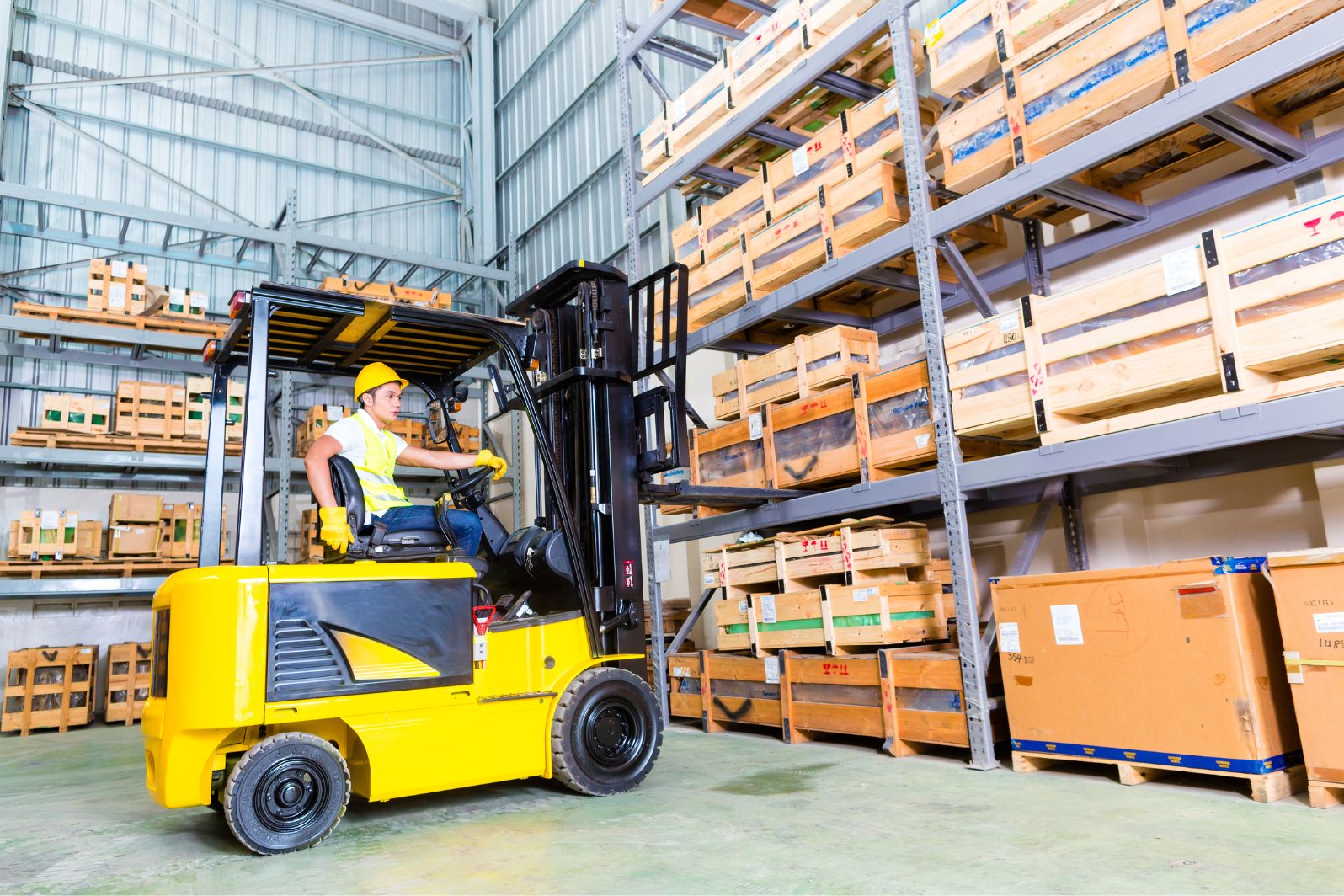
Modern warehouses are designed to maximise storage capacity while maintaining speed, safety, and operational efficiency. As businesses handle growing inventory volumes and a diverse range of SKUs, high-density racking systems have become essential for optimising space utilisation. However, these systems may not function effectively without the right handling equipment and operational strategies.
The integration of advanced handling equipment, such as warehouse forklifts, reach trucks, stackers, and pallet trucks, ensures that goods move efficiently through narrow aisles and tall racking structures. When paired with well-planned operations, these solutions allow warehouses to achieve higher storage density without compromising productivity.
Table of Contents
What are High-Density Racking Systems?
High-density racking systems are designed to maximise storage within limited warehouse space. Instead of spreading inventory horizontally, they optimise vertical storage and reduce aisle space, allowing more pallets to be stored within the same footprint.
Some common high-density racking formats include drive-in, mobile pallet, shuttle, and push-back racking. Each system prioritises storage density while maintaining structured inventory management.
However, the increased storage capacity also introduces new operational challenges. Narrow aisles, greater heights, and deeper pallet lanes require special handling equipment capable of precise movement and controlled load placement.
Without the right equipment and operational planning, accessing pallets in dense storage environments can slow down workflows and increase safety risks.
Role of Warehouse Handling Equipment
Efficient warehouse operations depend heavily on the movement of goods between storage areas, loading docks, and picking zones. Handling equipment plays a key role by enabling specific tasks: stackers handle mid-level racks, pallet trucks swiftly move palletised loads at ground level, order pickers facilitate quick item retrieval, and forklifts lift heavy loads and reach elevated storage. These machines are engineered for control in confined spaces, precise navigation, and lifting.
These equipment allow warehouses to maintain high throughput while using less floor space. This is especially important in sectors such as e-commerce, manufacturing, and food distribution, where inventory must move quickly and consistently.
Proper selection of equipment ensures that pallet retrieval and placement remain smooth, even in complex storage layouts.
Supporting Vertical Storage and High Reach
High-density warehouses rely heavily on vertical storage. Pallets are often stored at heights ranging from a few metres to more than ten metres, depending on the warehouse design.
To support an easy workflow, specialised handling equipment is required. Reach trucks and high-lift forklifts allow operators to access upper rack levels while maintaining stability and precision safely.
A forklift with appropriate lifting capacity and attachments can efficiently move heavy pallets from ground level to higher rack positions. This capability is crucial for warehouses that aim to maximise cubic storage rather than simply floor space. High reach capabilities also ensure that the storage capacity aligns with the growing inventory without requiring warehouse expansion.
Moving Through Narrow Aisles and Dense Layouts
High-density racking systems help in creating more storage lanes by reducing aisle width. While this significantly increases storage capacity, it requires equipment that can operate efficiently within tighter spaces.
Compact forklifts, articulated trucks, and reach trucks can manoeuvre within narrow aisles while maintaining precise load placement. Instead of investing in new equipment, warehouses can also rent these machines from providers like Godrej RenTRUST, allowing them to operate efficiently without large upfront costs.
A forklift designed for indoor operations offers improved stability with the help of a tight turning radius, allowing operators to navigate dense warehouse layouts without disrupting surrounding inventory. These capabilities enable warehouses to balance storage density with operational efficiency.
Improving Operational Efficiency and Workflow
High-density storage systems are most effective when paired with an organised workflow management system. The right handling equipment ensures that pallet movement remains fast and predictable.
For example, pallet trucks can move loads quickly across warehouse floors, while order pickers help retrieve items for downstream operations. Stackers assist in managing mid-level racks, and forklifts handle heavier loads and higher placements.
By coordinating these tools within warehouse workflows, businesses can successfully reduce handling time, improve order accuracy, and maintain steady inventory movement.
A reliable forklift also supports loading and unloading operations at docks, ensuring that inbound and outbound shipments remain aligned with storage operations.
Enhancing Safety in High-Density Warehouses
Safety is an important part of operations in dense storage environments. Heavy loads, elevated racks, and limited aisle space create potential risks if equipment is not used correctly.
Proper handling practices help mitigate these risks. Equipment designed for warehouse environments focuses on stability and ergonomics, with enhanced visibility features.
A well-managedmaterial handling strategy ensures that both workers and inventory remain protected. Operators trained to use a warehouse forklift or other specialised machines can safely place and retrieve loads even at higher levels. Moreover, regular equipment maintenance further enhances the safety standards within the warehouse.
Flexible Equipment for Changing Storage Needs
Warehouses often experience seasonal fluctuations in demand and, as a result, require evolving storage requirements. As businesses grow or adapt their logistics strategies, the type and volume of equipment required also change.
Easy access to equipment, such as forklifts, stackers, or reach trucks, allows warehouses to scale operations without committing to long-term asset ownership. This flexibility helps warehouses to respond quickly to changes in the inventory volume, warehouse layouts, or operational demands.
Rental equipment providers enable warehouses to access reliable machines while maintaining operational flexibility and cost efficiency.
Conclusion
High-density racking systems allow warehouses to maximise storage capacity while maintaining organised inventory management. However, these systems can only perform effectively when supported by the right infrastructure.
Equipment such as stackers, pallet trucks, and warehouse forklifts enable smooth movement of goods through narrow aisles, high racks, and compact layouts. Together, they ensure that storage density does not compromise efficiency, safety, or operational speed.
By combining well-designed racking systems with reliable handling equipment and skilled operations, warehouses can unlock greater productivity while making the most of available space.
