


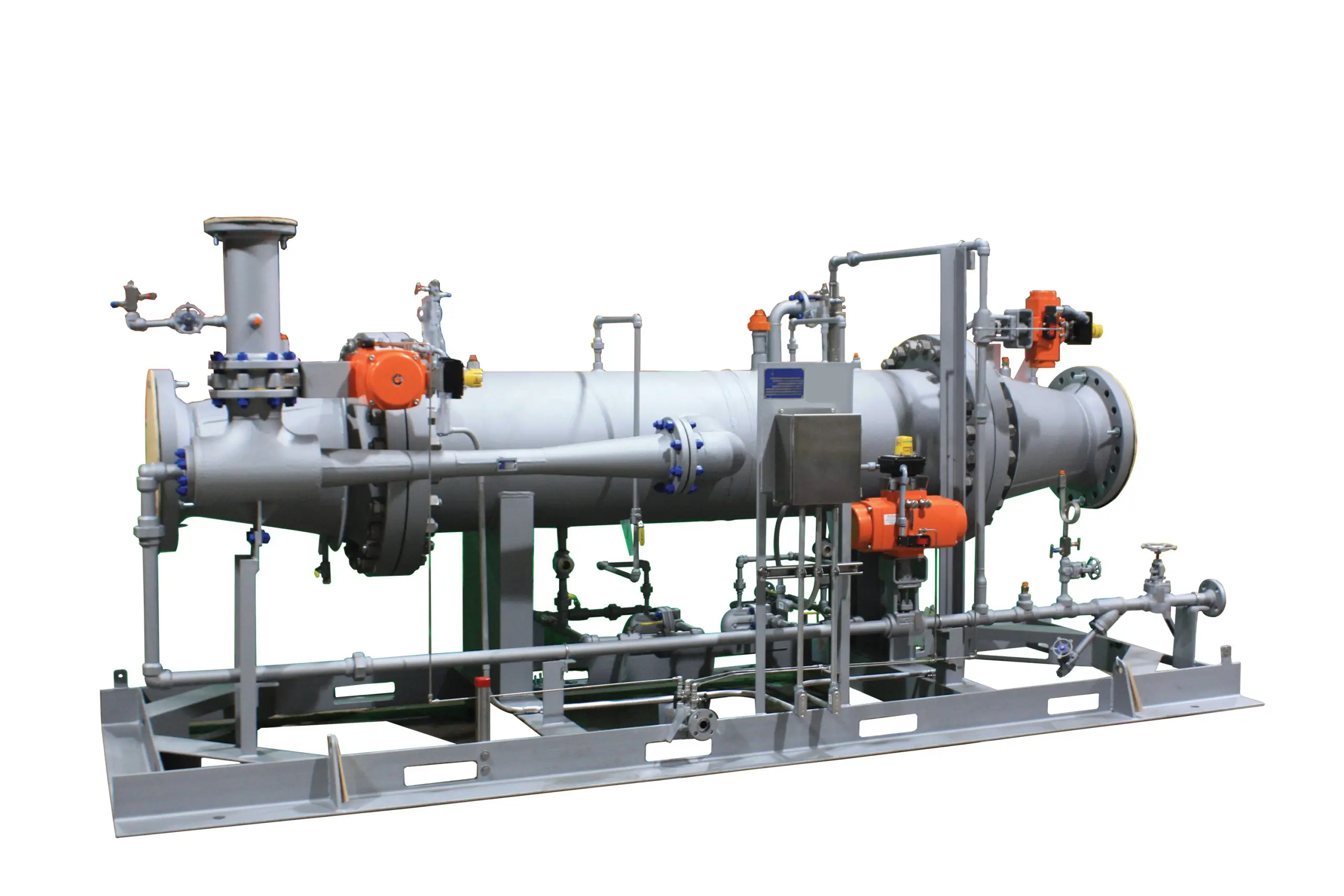
If you run a business in chemicals, food processing, pharmaceuticals, power generation, or petroleum refining, chances are good that steam jet vacuum systems are working somewhere in your plant right now. And chances are equally good that most of the executives in your building could not explain what they do or why you chose them over the alternatives.
That is a problem, because vacuum equipment is one of those behind-the-scenes investments that quietly shapes your operating costs, your uptime, and your ability to take on certain contracts at all. The technology itself is over a century old, which leads some people to assume it must be outdated. In reality, it remains one of the most financially sound choices available for industrial vacuum, and understanding why will make you a sharper buyer the next time a capital project or equipment upgrade crosses your desk.
What the technology actually is, in plain terms
A steam jet vacuum system creates vacuum using no moving parts. It works on a simple principle: high pressure steam is forced through a nozzle, where it expands and accelerates to very high speed. That fast-moving steam entrains the gases you want removed from your process, and the mixture is pushed through a diffuser that compresses it back up to a higher pressure for discharge.
Stack several of these ejectors in series, add condensers between the stages to knock out the steam, and you have a system that can pull vacuum levels deep enough for evaporation, distillation, deaeration, crystallization, and dozens of other process steps. The entire system can be built from cast iron, stainless steel, graphite, or corrosion-resistant plastics depending on what your process throws at it.
That is the whole story. No motors, no rotating shafts, no precision gears, no lubrication schedule. Steam in, vacuum out.
Why simplicity translates into money
Business leaders are constantly told that newer technology is better technology. Sometimes that is true. But in industrial settings, complexity has a cost, and simplicity has a value that shows up on financial statements for decades.
Consider what a steam jet system does not have. It does not have bearings that wear out. It does not have seals that leak and require replacement. It does not have an electric motor that burns out, or a control system that needs firmware updates. There is very little to inspect, very little to fail, and very little to rebuild. A well-built ejector can run for twenty or thirty years with basic attention.
Now compare that with mechanical vacuum pumps. Liquid ring pumps, dry screw pumps, and rotary vane machines all deliver vacuum, and in some applications they are the right call. But they bring rotating machinery into your facility, and rotating machinery brings maintenance schedules, spare parts inventories, rebuild costs, and failure risk. Every one of those line items is a recurring expense that a steam jet system largely avoids.
For a business leader, the question is not which technology is more impressive. It is which one delivers the vacuum your process needs at the lowest total cost over the life of the equipment. In many process environments, especially those that already generate steam, the steam jet system wins that comparison.
The economics depend on your steam situation
Here is the honest caveat, because no technology decision is one-size-fits-all. Steam jet systems run on motive steam. If your facility already has a steam plant with spare capacity, the incremental cost of feeding an ejector is modest, and the economics strongly favor steam jets. You are essentially using energy you are already generating.
If you would have to install a boiler just to run vacuum equipment, the math changes, and mechanical pumps deserve a hard look. This is why the same technology can be a bargain at one plant and a poor fit at another. Any vendor who recommends a solution before asking about your steam supply is skipping the most important question.
There is also a growing middle ground. Hybrid systems that pair steam ejectors with mechanical pumps for specific load ranges are increasingly common, and they let plants capture the strengths of both approaches. The point is that the decision should be driven by your energy infrastructure and your process requirements, not by default assumptions.
Where steam jets earn their keep
Certain conditions play directly to the strengths of steam jet systems, and knowing them helps you recognize when the technology is the financially sound choice.
Corrosive processes are a strong example. Gases that would destroy a mechanical pump in months can often be handled by an ejector built from impervious graphite or fiber-reinforced plastic. The ejector simply has less to corrode, and the materials that protect it are well proven.
High vapor loads are another. When your process generates large amounts of condensable vapor, mechanical pumps struggle with the volume, while steam jets handle it comfortably and the interstage condensers dispose of it efficiently.
Harsh physical environments matter too. Outdoor installations, dirty service, and processes with entrained liquids or solids will wreck precision machinery. An ejector shrugs them off. There is a reason refineries and chemical plants, environments not known for being gentle, have relied on this equipment for generations.
The reliability argument in business terms
Reliability is not an engineering nicety. It is revenue protection. Every hour your vacuum system is down is an hour your process is not making product, and unplanned downtime in a process plant can cost thousands of dollars per hour once you count lost throughput, wasted material, restart labor, and missed delivery commitments.
Because steam jet systems have almost no failure modes beyond erosion, corrosion, or fouling of the nozzle and diffuser, their failure rate is low and their failures are usually gradual and predictable rather than sudden. Gradual failures get caught during scheduled maintenance. Sudden failures become emergency purchases, expedited freight, and angry customers.
When you evaluate vacuum equipment, it is worth pricing that difference. A cheaper machine that fails twice a year is more expensive than a robust one that runs continuously, even if the purchase price gap is significant.
What to ask when a vacuum project lands on your desk
You do not need an engineering degree to ask good questions. When a vacuum system purchase or upgrade comes up for approval, ask these:
- Do we have steam available at the pressure and quantity this system needs, and what does that steam actually cost us per hour?
- What is the total cost of ownership over ten years, including energy, maintenance, parts, and expected downtime, not just the purchase price?
- Was the system sized against our real process loads, or against padded worst-case assumptions that will make us pay for capacity we never use?
- What materials of construction are proposed, and do they match the corrosivity of our actual process stream?
- What happens to performance if our cooling water runs warm in summer, or if our steam pressure sags during peak demand?
Vendors who welcome those questions are partners. Vendors who dodge them are telling you something.
The bottom line
Old technology is not the same as obsolete technology. Steam jet vacuum systems have survived a century of competition for a reason: they convert an energy source many plants already have into reliable, deep vacuum with almost nothing to break. For business leaders, that combination of low mechanical risk, long service life, and predictable operating costs is exactly what capital equipment should deliver. The next time a vacuum project reaches your desk, you will know the right questions to ask, and that knowledge alone is worth more than any spec sheet.
