


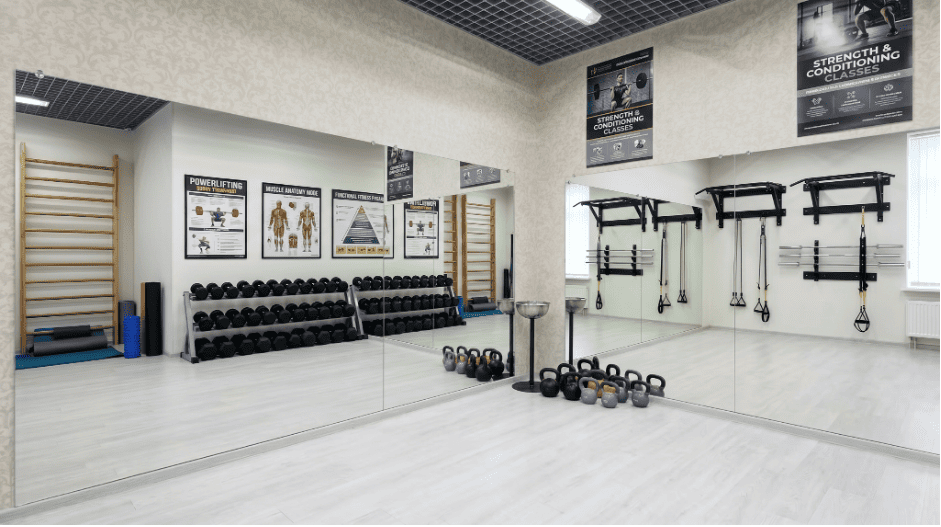
Oversized Gym Wall Mirror – The Upgrade Your Workout Space Actually Needs
Walk into most home gyms and you will notice the same mistake: people obsess over equipment but ignore visibility. You can have premium weights, a squat rack, and resistance systems, but if you can’t see your form clearly, you are training blind. That’s not just inefficient, it’s risky. An oversized gym wall mirror fixes that instantly. It turns your workout area from a cluttered equipment zone into a controlled, feedback-driven environment. Instead of guessing your posture or alignment, you see it in real time. That’s the difference between casual exercise and intentional training.
Table of Contents
What Defines an Oversized Gym Wall Mirror
This isn’t a standard decorative mirror you hang for aesthetics. Oversized gym mirrors are large-format glass panels designed specifically to cover substantial wall space. Typically, they range from 60 inches wide to full wall-to-wall installations, often extending floor to near ceiling.
The purpose is simple: maximize visibility. A small mirror forces you to adjust your position constantly. A large mirror eliminates that friction. Whether you’re doing deadlifts, yoga, or mobility work, your entire body stays in frame without compromise.
Thickness also matters. High-quality gym mirrors are usually made from 1/4-inch or thicker tempered glass. That thickness reduces distortion and increases durability, two things you cannot afford to overlook.
The Real Reason Professionals Use Large Mirrors
This isn’t about vanity. It’s about feedback loops. Professional gyms install oversized mirrors because they improve performance outcomes. When you can see your body position during movement, you correct mistakes immediately instead of reinforcing bad habits. Over time, that compounds into better strength gains, improved posture, and reduced injury risk.
Think about exercises like squats or lunges. A slight knee misalignment repeated over months can cause serious strain. Without a mirror, you rely on guesswork. With one, you adjust instantly. That’s why serious lifters, trainers, and athletes treat mirrors as essential—not optional.
How Oversized Mirrors Transform Small Spaces
Here is something most people underestimate: mirrors don’t just reflect your body; they reshape your environment. An oversized gym mirror makes even a cramped room feel open and structured. It creates visual depth, doubles perceived space, and reduces that boxed-in feeling that kills motivation. Suddenly, your small home gym feels like a professional studio.
Light reflection is another overlooked advantage. If your gym lacks natural light, a large mirror amplifies whatever lighting you have. The result is a brighter, more energizing space that actually makes you want to train.
Choosing the Right Size Without Guessing
Most people choose mirror size based on budget, not functionality, and that is where they go wrong. If your mirror doesn’t capture your full range of movement, it’s underperforming. You shouldn’t have to step back, tilt your head, or adjust your position just to see your form.
A practical rule: your mirror should be wide enough to cover your primary workout zone and tall enough to reflect your full body from multiple angles. For most home gyms, that means going bigger than you initially think.
Wall-to-wall installations are ideal. If that’s not possible, aim for the largest panel your space and structure can support. Cutting corners here defeats the entire purpose.
Glass Type and Build Quality – Where Most Buyers Fail
This is where people make expensive mistakes. Not all mirrors are built for gym environments. Standard household mirrors often use thinner glass that can warp reflections. That distortion might be subtle, but it’s enough to mislead your form adjustments. In a training context, that’s unacceptable.
Tempered glass is the smarter choice. It’s stronger, safer, and designed to handle impact better than regular glass. If it does break, it shatters into small, less dangerous pieces rather than sharp shards. Edge finishing is another factor. Polished or beveled edges reduce the risk of injury and give a clean, professional look. Raw edges might save money upfront but introduce unnecessary risk.
Installation Mistakes That Ruin the Experience
Buying a high-quality mirror means nothing if you install it poorly. The biggest mistake is improper mounting. Oversized mirrors are heavy. Weak anchors or uneven wall surfaces can lead to instability, which is both dangerous and frustrating.
You need a secure mounting system—either heavy-duty adhesive combined with mechanical fasteners or professionally installed brackets. The goal is zero movement. Even slight shifts can break the illusion of stability and affect your focus during workouts.
Alignment is just as critical. If the mirror isn’t perfectly level, you’ll notice it every time you train. It’s a subtle distraction that compounds over time.
Where to Place Your Gym Mirror for Maximum Impact
Placement isn’t random. It should be strategic. Position the mirror directly in front of your main workout area. If you primarily lift weights, it should face your rack or free-weight zone. If your focus is mobility or cardio, align it with that space instead.
Avoid placing mirrors where glare from lighting or windows interferes with visibility. Reflection clarity matters more than decorative symmetry.
Also, consider safety zones. Don’t install mirrors where equipment might collide with them, especially in tight spaces. A cracked mirror isn’t just an aesthetic issue; it’s a hazard.
The Psychological Edge You’re Ignoring
There’s a mental component most people don’t talk about. Training in front of a large mirror increases focus and accountability. You’re more aware of your posture, your effort, and even your consistency. That awareness pushes you to maintain standards.
It also reinforces habit-building. When your environment looks like a serious training space, you treat it that way. That shift in mindset is often what separates people who quit after a month from those who stay consistent.
Maintenance – What It Takes to Keep It Functional
Oversized mirrors are low maintenance, but neglect shows quickly. Sweat marks, dust, and smudges reduce clarity. If you’re relying on the mirror for form correction, a dirty surface defeats the purpose. Regular cleaning with a non-abrasive glass cleaner keeps visibility sharp.
Avoid harsh chemicals that can damage coatings or edges. Microfiber cloths work best—they clean without leaving streaks or scratches.
Also, inspect mounting points periodically. A quick check ensures everything stays secure over time.
Cost vs Value – Stop Thinking Short-Term
You’re going to be tempted to go cheap. Don’t. A low-cost mirror might save money upfront, but it often brings distortion, fragility, and poor durability. You’ll either replace it or regret it every time you use it.
An oversized gym wall mirror is a long-term investment. It directly impacts your training quality, safety, and environment. When you factor that in, the cost becomes justified.
The real question isn’t “How cheap can I go?” It’s “Will this actually improve my training experience?” If the answer is no, you’re wasting money regardless of price.
Common Mistakes to Avoid
- Choosing a mirror that’s too small for your workout range
- Ignoring glass thickness and ending up with distorted reflections
- Poor installation that leads to instability
- Placing the mirror where lighting creates glare
- Treating it as decoration instead of a functional tool
Each of these mistakes reduces the effectiveness of your setup. Avoid them, and the mirror becomes one of the most valuable elements in your gym.
Final Take
If you’re building a home gym and skipping an oversized mirror, you’re cutting corners in the wrong place. Equipment builds strength, but feedback builds precision. Without precision, progress stalls or worse, injuries creep in. A large gym wall mirror closes that gap. It gives you real-time correction, better spatial awareness, and a more professional training environment. Stop thinking of it as an accessory. It’s part of your training system. And if your goal is actual improvement, not just going through the motions, you already know what to do.
