


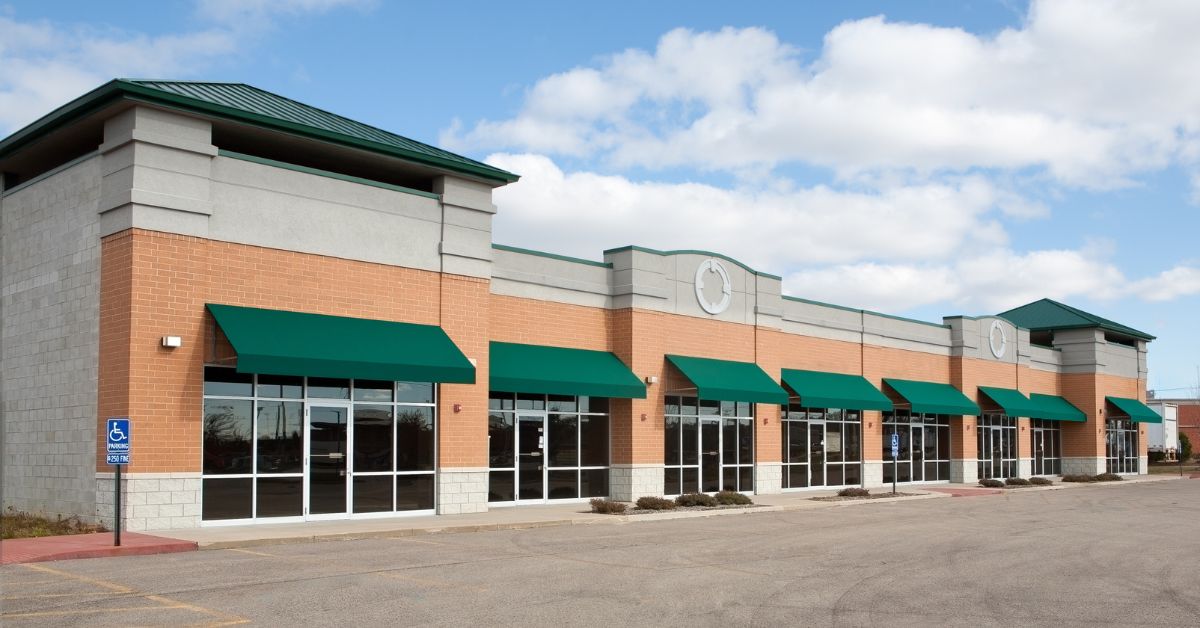
There’s a corner in most towns that tells the story. Twenty years ago it was a field, or a farm implement dealer, or a department store with a parking lot that was never full. Now it’s a medical office building, a distribution center, or a strip of pads with a coffee shop, a bank branch, and a space that has turned over three times.
Nobody voted on that corner in one sitting. It changed through a long series of zoning hearings, land sales, and financing decisions, most of them uneventful enough that almost nobody attended. The cumulative effect is what people notice, usually all at once, usually after it’s finished.
Table of Contents
What Is Actually Getting Built
The mix has shifted noticeably over the past decade, and it’s worth being specific about how.
Traditional retail construction has slowed. What replaces it is rarely another anchor store. Logistics and light industrial space has expanded fast, driven by the same online ordering that emptied the storefronts. Medical office space keeps growing as health systems push services out of hospitals and into neighborhoods. Self-storage appears wherever land is cheap, and zoning is agreeable. Mixed-use projects, apartments over ground-floor commercial, show up in downtowns that spent decades trying to fill vacant second floors.
Each of these reshapes a community differently. A distribution center brings truck traffic and shift work and relatively few visitors. A medical building brings steady daytime activity and a lot of parking demand. A mixed-use block brings residents, which changes the arithmetic for every restaurant nearby.
Lumping all of it together as development obscures the differences that actually matter to the people living around it.
The Case Communities Make For It
The argument in favor is straightforward, and it holds up better in some places than others.
Commercial property generally pays more in taxes than it consumes in services. Residential growth brings students, road use, and public safety demand. A warehouse does not enroll children in school. For towns squeezed between rising service costs and residents who do not want a rate increase, commercial tax base is one of the few available levers.
Jobs are the second argument, though the details matter. Distribution work pays differently than medical office work, and a project’s employment numbers usually blend permanent positions with construction jobs that end at ribbon cutting. Both are real. They are not the same thing.
The third argument is convenience, and it’s the one residents feel most directly. Not having to drive thirty minutes for a specialist appointment or a grocery run changes daily life in a way that shows up on nobody’s spreadsheet.
The Building Phase Has Its Own Footprint
Long before a project generates a single dollar of tax revenue, commercial building construction is reshaping the immediate area in ways that residents experience daily and developers tend to describe as temporary.
Haul routes get chosen, and the roads on them take a beating that local budgets absorb. Construction traffic stacks up at intersections designed for a quieter era. Blasting, pile driving, and early morning deliveries make themselves known for a year or more. Stormwater management during construction is where a lot of neighbor complaints originate, because a graded site with no vegetation moves water in a hurry.
There’s an upside on this side of the ledger too. Sizable projects put regional trades to work, and the electricians, concrete crews, and steel erectors on site are frequently local firms whose payroll circulates within the same county. Material suppliers, equipment rental yards, and the restaurants near the site all see it.
Infrastructure is where the real long-term questions sit. A project that requires a new turn lane, a water main extension, or a lift station raises a fair question about who pays for it, and the answer varies enormously. Some communities negotiate that cost into the deal. Others discover the bill later, after the ribbon has been cut and leverage has evaporated.
What Residents Tend to Push Back On
Opposition usually gets characterized as resistance to change. Sometimes it is. More often it comes down to a few specific and reasonable concerns.
Traffic is the perennial one, and traffic studies are treated with skepticism for a reason, since they model a single project rather than the fourth project on the same road in six years. Cumulative impact is exactly what residents notice and exactly what a project-by-project review process struggles to capture.
Character is harder to argue in a hearing but no less real. A corridor that becomes indistinguishable from a corridor two counties over has lost something people valued even if they could not quantify it. Design standards, setbacks, landscaping requirements, and limits on signage are the tools communities use, with widely varying results.
Then there’s the effect on existing businesses. New commercial space can lift a district by drawing more people to it. It can also raise rents on the small operators who made the district worth visiting in the first place. Both happen, sometimes on the same street.
What Separates the Places That Handle It Well
Communities that come out of a development wave in decent shape usually did a few things earlier than everyone else.
They planned at the corridor level instead of parcel by parcel, so each approval was measured against a picture of the whole road rather than judged in isolation. They updated zoning before the pressure arrived, since rewriting the rules with an application already pending rarely goes well. They were specific about infrastructure costs up front. And they were honest with residents about tradeoffs instead of promising that nothing would change.
The places that struggle tend to be reactive. Rules get rewritten after a project everyone disliked, which is roughly like installing a stoplight after the accident.
Development itself is not the variable that determines the outcome. Growth arrives on its own schedule, driven by highway access, land prices, and demand that originates far outside any town’s control. What communities actually get to decide is how prepared they are when it shows up, and how much of the eventual cost gets negotiated while the leverage still exists.
