


Most garages get lighting as an afterthought. A single bare bulb, maybe a dusty fluorescent tube that flickers when the temperature drops, and that’s about it. Then one Saturday you try to change a brake pad or hunt for a dropped bolt, and the whole setup feels embarrassingly dim. Good garage lighting isn’t a luxury. It makes the space safer, the work faster, and the room far nicer to spend time in. Here’s how to plan it sensibly.
Table of Contents
Start With What You Actually Do in There
Before you buy anything, think about how you use the space. A garage that mainly shelters the car needs very different lighting from one that doubles as a workshop, a gym, or a weekend project zone. Parking and storage call for general, even light, while detailed work such as woodworking or car maintenance demands brighter, more focused illumination at the bench. Walk around at night, switch everything on, and notice where shadows pile up. Those dark corners are where your effort should go first.
Brightness and Color: The Two Numbers That Matter
Two numbers matter more than anything else on the box: lumens and color temperature. Lumens tell you how much light a fixture produces, and a working garage usually needs far more of it than a living room does. Color temperature, measured in Kelvin, describes the tone. Cooler, daylight-style white, roughly 4000K to 5000K, keeps you alert and makes colors easier to judge, which is handy when you’re matching paint or tracing wires. Warmer tones feel cozy but can make fine detail harder on the eyes.
Lighting Options: Modular Panels vs. Classic Fluorescent Tubes
Fluorescent tubes have been the garage default for decades, and it’s easy to see why. They’re inexpensive, widely available, and cover a long stretch of ceiling with even light. The downsides are well known, though. Some take a moment to warm up, some hum or flicker, and cold weather can make them struggle, which matters in an unheated garage in winter. The fixtures are bulky too, and swapping tubes becomes a recurring chore.
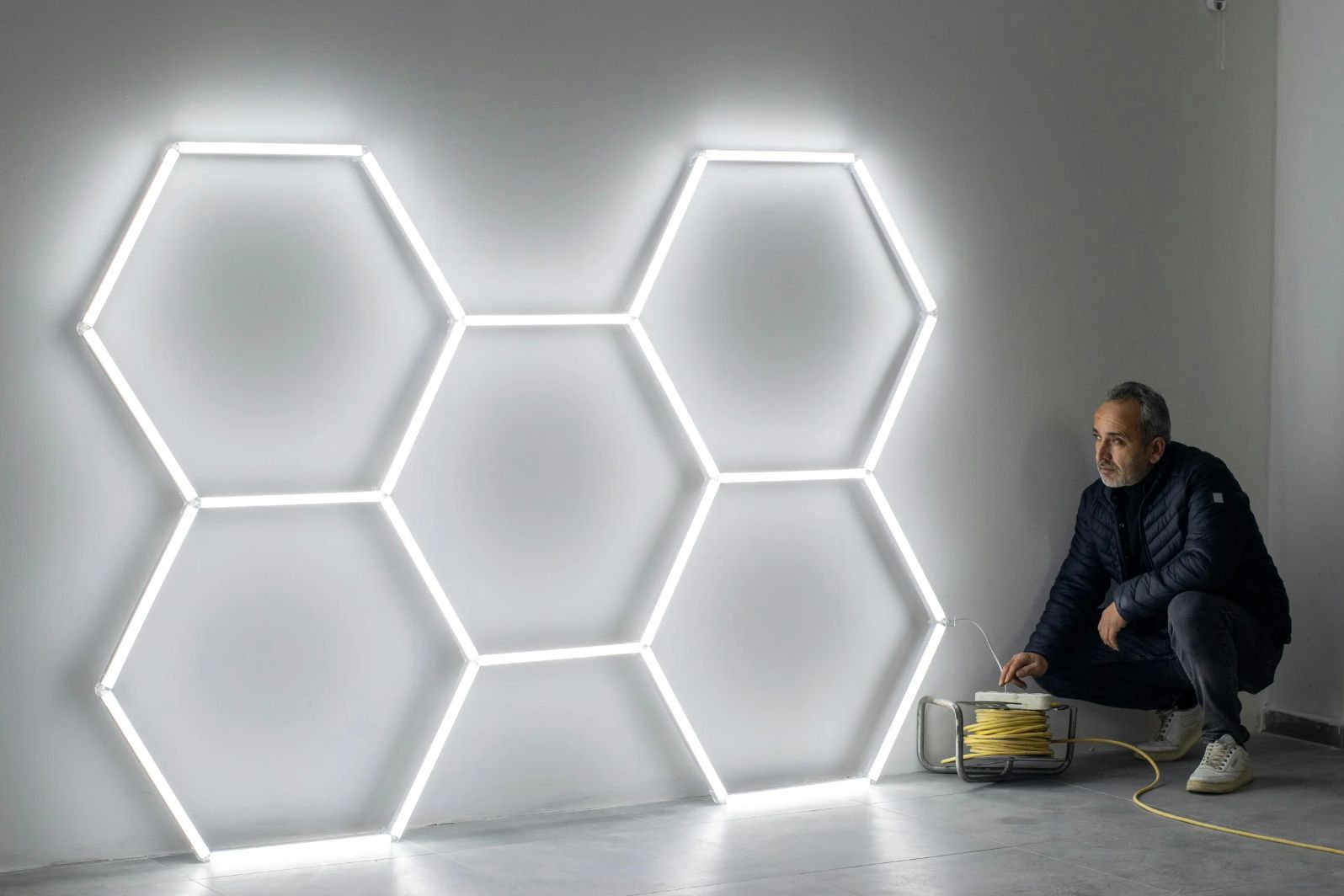
Modular LED panels take a different approach. Instead of one long fixture, you build the lighting from individual pieces arranged on the wall or ceiling. A hexagon light setup is a good example: the honeycomb-shaped panels connect in patterns you design yourself, so you can run light along a workbench, wrap it around a corner, or turn a plain wall into a feature. LED panels generally switch on instantly and cope well with temperature swings. Still, check each product’s brightness, mounting method, and extra features before relying on them.
So which one wins? Honestly, it depends on the job. If you need cheap, broad coverage across a big ceiling, tubes still make sense. If you value flexibility, a cleaner look, and the freedom to put light exactly where you work, a modular hexagon light layout is hard to beat. Plenty of people combine both, using overhead light for general coverage and shaped wall panels for accent and task lighting around the bench.
Layer Your Light to Kill the Shadows
The smartest garages use layers. General overhead light fills the room so nothing feels cramped, task lighting sits above benches and tool stations, and accent lighting adds personality to walls or a display shelf. Layering also solves the shadow problem: when light arrives from several directions, your own body stops blocking it. Place fixtures slightly in front of where you stand rather than directly overhead, so your shadow falls behind you instead of across the work.
Practical Details That Save Headaches
Think about switches and zones before drilling a single hole. Putting the entrance lighting on its own switch lets you light the way in without blazing the whole garage. Check the moisture rating if your garage gets damp, keep cables tidy and away from spots where tools or vehicles might snag them, and call an electrician if you’re unsure about wiring. This isn’t the place to gamble, and a small bit of planning now prevents expensive fixes later.
From Dim Storage Corner to a Room You Actually Use
A well-lit garage changes how you feel about the whole house. Tasks get easier, mistakes shrink, and a gloomy corner becomes somewhere you actually want to be. Start by listing your activities, pick fixtures that match, and mix general with task light. Whether you stick with tubes, switch to panels, or blend both, aim for even light, the right color tone, and fewer shadows. Do that, and your garage stops being storage and starts being a proper room.
