


Understanding the Importance of Proper Garden Watering
A gardener steps outside at three o’clock on a hot July afternoon to find the petunias by the front door hanging limp over the edge of their basket, even though they were watered generously that morning. Every gardener knows that small sinking feeling. Water is essential for plant growth, nutrient uptake, photosynthesis and the development of healthy roots. Good gardening, though, takes far more than simply turning on the tap every day. How much water plants receive, when it arrives, how it’s delivered and what each plant actually needs all shape the health of a garden. A steady watering routine helps plants grow stronger roots, keep their leaves healthy and flower right through the season. Thirsty plants and drowned plants can look surprisingly alike.
Different plants need very different amounts of moisture. Vegetables, flowering annuals, established shrubs and drought-tolerant perennials may share the same patch of ground yet respond to watering in completely different ways. Soil makes a big difference too. Sandy soil usually loses moisture quickly, clay soil holds on to it for much longer, and loamy soil often strikes a comfortable balance between drainage and water retention. A lavender bush and a row of lettuces planted side by side will rarely agree on how often the hose ought to come out. Every plant has its own thirst.
Gardeners can improve plant health a great deal by watching soil conditions, keeping an eye on the weather and adjusting their watering instead of sticking to a rigid daily routine. Pushing a finger into the soil before reaching for the hose takes a few seconds and often tells the whole story. The garden usually says what it needs to anyone who checks.
Choosing the Right Watering Equipment
The right equipment makes outdoor plant care easier and helps water reach exactly where it’s needed. A standard hose can deliver plenty of water, but controlling the flow matters enormously around delicate flowers, young seedlings and freshly transplanted plants. A tray of tiny lettuce seedlings can be washed clean out of its compost by one careless blast. Gentle care starts with the right tool.
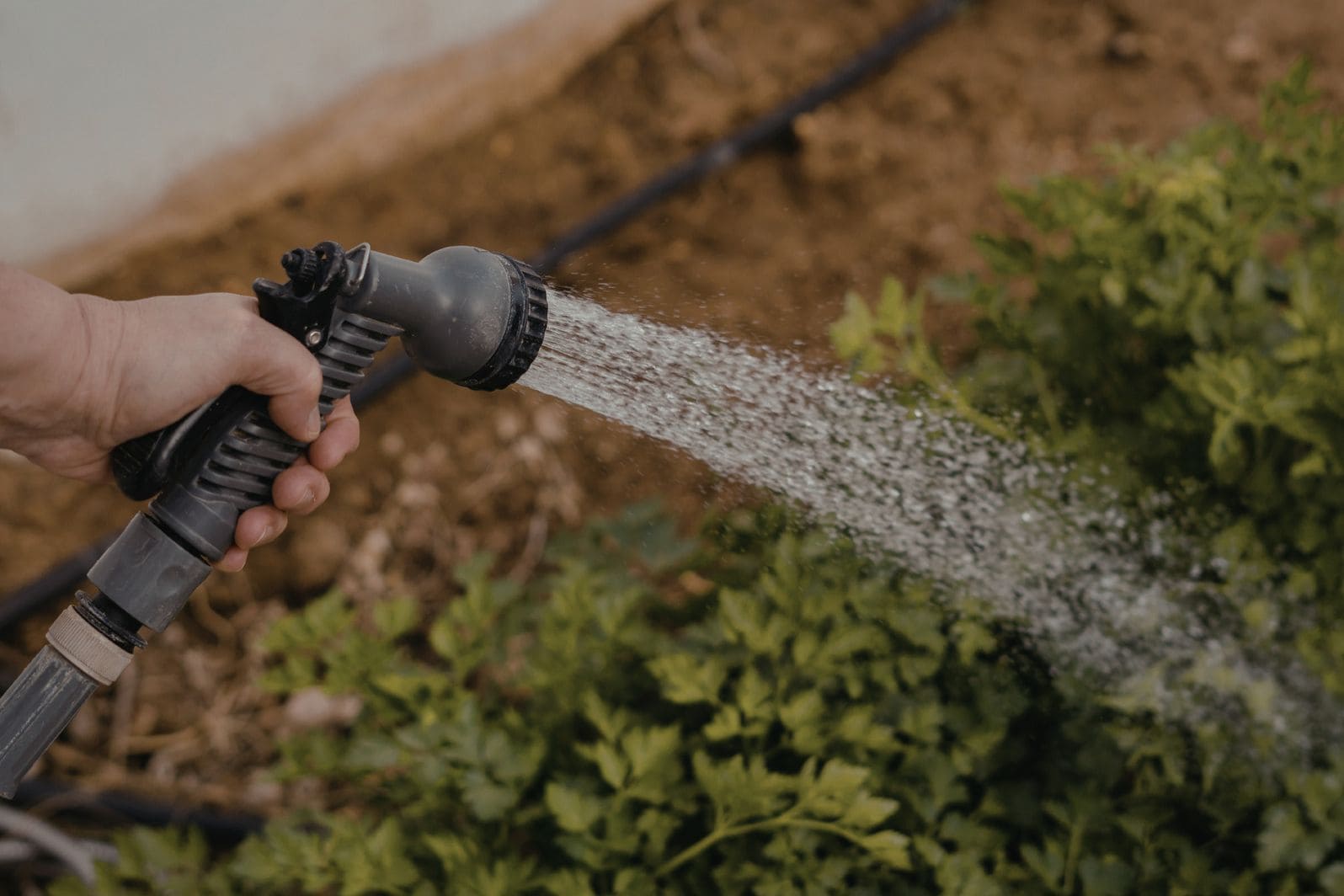
A garden hose nozzle lets gardeners match the water stream to the job in hand. Different spray patterns serve different purposes, from gently showering seedlings to rinsing muddy tools or giving a stronger blast to suitable hard surfaces like a dusty patio. Choosing the right setting helps prevent soil being washed away, stems snapping and water being wasted. A simple twist of the nozzle can be the difference between nurturing a plant and flattening it.
For everyday garden care, a gentle shower or soft spray usually works far better than a concentrated jet. Strong water pressure can damage fragile leaves, expose roots and flatten newly planted flowers. Testing the flow on an empty patch of ground before aiming at sensitive plants is a habit worth building. A sweet pea seedling knocked sideways on its first week rarely recovers its early enthusiasm.
Watering equipment also needs checking from time to time. Leaking connections, cracked fittings and damaged hoses waste water and make it harder to deliver moisture where it’s needed. A connector that sprays sideways every time the tap is turned on soaks the gardener’s shoes far more effectively than the flower bed. Small repairs keep the whole routine running smoothly.
Benefits of Watering Wands for Plant Care
Watering wands are a real help for reaching plants that a standard hose struggles to water properly. Their extra length lets gardeners aim water at the base of plants without constant bending, stretching or stepping into carefully planted areas. A grandmother with a stiff back can water her beloved geraniums without kneeling on damp ground. Comfort makes regular care far more likely.
These tools shine in flower beds packed with closely spaced plants. Gardeners can steer water between leaves and stems, keeping foliage drier than it would be with an overhead spray. That can help limit the conditions that encourage certain fungal diseases, especially in dense planting where air struggles to circulate. Roses, in particular, tend to look far happier when their leaves aren’t left wet overnight. Dry leaves often mean healthier plants.
Long-handled watering tools are just as practical for raised beds, vegetable gardens and rows of containers along a patio. Their reach puts water close to the soil surface, right where roots can drink it in. A gardener can water the back of a deep raised bed without leaning across and squashing the front row of herbs. Reach brings both precision and comfort.
When choosing a watering wand, length, weight, grip and spray control all deserve thought. A lightweight design feels far more comfortable during long watering sessions on a warm evening, while adjustable flow settings can suit plants with very different moisture needs. A wand that feels heavy after five minutes soon gets left in the shed. The best tool is the one that’s pleasant to use.
Watering Hanging Baskets and Container Plants
Hanging baskets dry out far more quickly than plants growing in the ground. Their small volume of compost, full exposure to sunshine and the breeze flowing around them all speed up moisture loss, especially in hot or windy weather. A basket that looked lush at breakfast can be gasping by mid-afternoon on a bright August day. Baskets live on the edge.
Checking the compost regularly is the best way to know when watering is really needed. If the top layer feels dry, it’s worth feeling a little deeper before deciding whether to water. Containers do best when they receive enough water to soak the whole root zone, with any excess allowed to drain freely. A pot sitting in a saucer of stale water can suffer just as badly as one left dry.
Garden hose wands make this job much simpler by extending the gardener’s reach up to elevated baskets. A gentle flow spreads water through the compost without sending a cascade over the edges and down the front door. Nobody enjoys a cold shower of muddy water while trying to look after the flowers. Gentle and steady wins every time.
Container plants often need more frequent attention than established garden beds. How often they need water, though, depends on the weather, the size of the container, the type of plant and the compost used, not a fixed timetable. A balcony full of herb pots in a heatwave may need daily care, while the same pots in a cool, cloudy week might go several days without. Watching beats guessing.
Maintaining Healthy Flower Beds
Flower beds benefit from watering that encourages roots to grow deep. Frequent, shallow watering can keep the surface looking damp while deeper roots go thirsty. In many gardens, watering less often but more thoroughly sends roots further down into the soil, where moisture lasts much longer. A dahlia with deep roots shrugs off a dry spell that would wilt a shallow-rooted neighbor. Depth brings resilience.
The best schedule depends on rainfall, temperature, soil type and what the plants need. Newly planted flowers usually need closer attention, because their roots haven’t yet spread into the surrounding soil. Established perennials can often go longer between waterings once their roots are well settled. A young plant in its first summer needs far more care than a hardy old favorite that’s been in the border for a decade.
Watering close to the base of plants also cuts down on runoff and evaporation. Mulch adds further benefits by keeping soil temperatures steadier, slowing moisture loss and holding back weeds. Organic materials such as shredded bark, composted leaves and straw can all work well, as long as they aren’t piled up against plant stems. A neat ring of mulch around each plant keeps the soil cool even on the hottest afternoon.
Watching flowers for signs of water stress is part of good care. Wilting, dry soil and slowed growth can all point to too little water, although some plants droop temporarily in fierce afternoon heat and perk up again by evening. A hydrangea sulking at noon is often perfectly fine by dinner time. Checking the soil before reaching for the hose prevents needless watering.
Reaching Difficult Areas Without Damaging Plants
Gardens are full of awkward spots: narrow paths, dense borders, raised containers and plants tucked away behind shrubs. Reaching them with a short hose or a watering can is often a struggle. Extended watering tools give far better control and help gardeners avoid trampling nearby plants or compacting the soil underfoot. One careless footstep can crush a whole clump of emerging bulbs.
A carefully aimed stream can reach the roots of plants hiding beneath overhanging leaves. That’s especially handy in mixed flower beds, where low ground-cover plants and tall flowers grow side by side. A gentle trickle slipped beneath a leafy canopy reaches exactly where it’s needed. Precision protects the whole bed.
Pulling hoses roughly through planted areas is best avoided. Dragging a heavy hose across a flower bed can snap stems, scatter mulch and crush fresh growth. A hose snagging on a lavender bush and tearing off half its flowering stems is a lesson most gardeners only need once. Planning the watering route before starting saves a great deal of damage.
Conserving Water During Outdoor Irrigation
Efficient watering keeps plants healthy while cutting down on wasted water. Early morning is usually a good time to water, because temperatures are lower and less water evaporates. It also gives any wet leaves the whole day to dry. A quiet half hour in the garden before breakfast can be one of the most peaceful parts of the day. Good timing benefits both plants and gardeners.
Recent rainfall deserves a thought before the hose comes out. A rain gauge helps estimate how much water the garden has already had, and a quick check of the soil shows whether more is needed at all. Automated irrigation systems benefit from seasonal adjustments so they don’t water a garden that’s already soaked. A sprinkler running happily during a rainstorm wastes water and money alike.
Aiming water at the roots, fixing leaks and grouping plants with similar needs all improve efficiency further. Drought-tolerant plants can live in spots that get watered less often, while moisture-loving plants can sit where watering is easiest to manage. Grouping thirsty ferns together and tough Mediterranean herbs elsewhere makes every trip with the hose count. Thoughtful planting saves water before a single drop is poured.
Conclusion
Healthy gardens depend on steady observation, the right watering equipment and an understanding of what each plant needs. Adjustable hose nozzles, extended watering wands and careful watering techniques make it far easier to care for flower beds, hanging baskets, container plants and those awkward hard-to-reach corners. The right tools turn a chore into something closer to a pleasure.
By watering deeply when it’s needed, protecting delicate leaves, keeping an eye on soil moisture and cutting down on waste, gardeners can grow stronger roots and healthier plants all season long. These simple habits make everyday garden care far more effective and help outdoor spaces stay productive, beautiful and resilient. A garden watered with care tends to repay every drop.
