


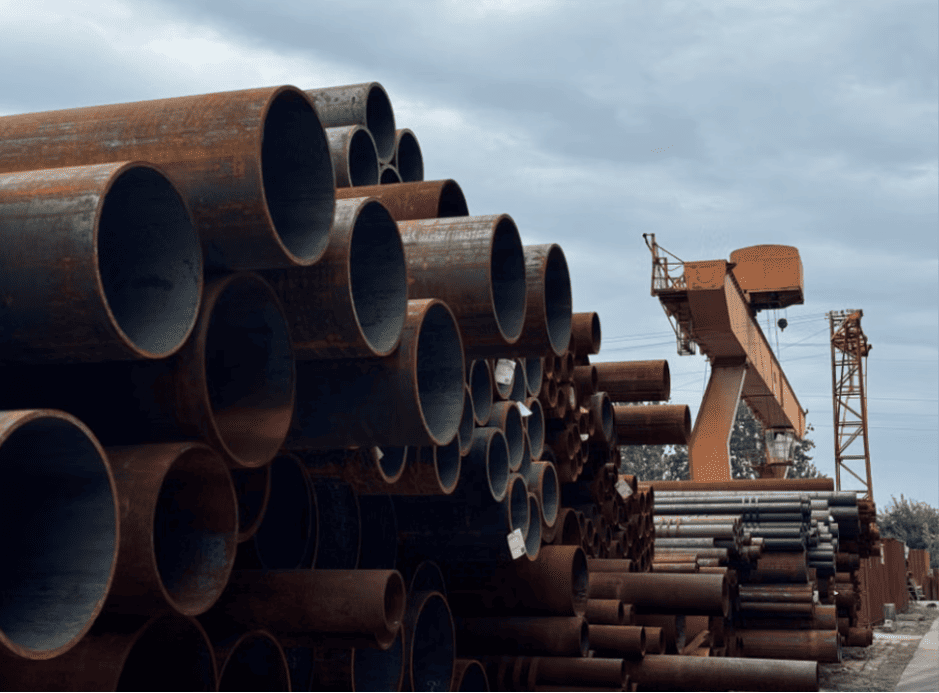
When working on a well, a little error in casing selection can become a huge issue down the line. If the size is not suitable for the well design, you can have problems with space for tools or cementing. If the quality of the steel is not strong enough, the casing will break under pressure. And if the connections are not right, leaks or pressure loss can slow everything down.
In reality, casing is much more than a pipe that you put in the ground. Every detail in its specification plays a role in how the well performs from drilling to production. Once you have a clear understanding of these details, you can prevent expensive surprises and maintain the well’s proper operation.
This article will help you understand how API casing specifications directly relate to well performance and why each specification is important.
Table of Contents
1. Casing Dimensions Shape Wellbore Stability and Production Design
First thing that most people look at when selecting casing is size, and there’s a reason why. The diameter determines the fit of the pipe in the wellbore and the available space for cement, tools and production equipment. With API casing specifications, you can work with sizes ranging from 4 ½ inches up to 20 inches, depending on your well design.
But it’s not just about fitting the pipe in the hole. Wall thickness and weight are also important since they influence the load capacity of the casing once installed in the hole. In many cases, a bigger, deeper well requires more support than merely size.
So, by matching the casing sizes to your well design, you are in fact laying the foundations for stability. Once you have the right one, the rest of the things fall into place and work as they should.
2. Steel Grade Determines How Casing Handles Downhole Loads
After the size is determined, the next important factor is the choice of steel grade. This indicates the strength of the casing and how it will behave under pressure. The most common grades are J-55, N-80, L-80 and HCP-110, each of which is made for different stresses and depths.
The deeper the well, the more pressure casing will receive from all sides. It can be pulled, squeezed or subjected to an extremely high internal pressure. A correct grade allows the pipe to maintain its shape and not bend, collapse or break from these forces.
However, stronger is not necessarily better. Selecting a higher grade than required for the well can result in unnecessary and costly expenditures. The trick is to match the grade to actual conditions, so that the casing performs safely and efficiently.
3. Thread and Connection Selection Protects Pressure Integrity
Every casing joint depends on its connection, and this is where many problems can start if the choice is not right. API, premium, semi-premium, and flush-joint connections all serve different needs depending on the well design and pressure levels.
These connections serve more than just to keep pipes connected. These must seal correctly to prevent the loss of pressure and to keep fluids under control within the well. If threads are damaged or not properly matched, even a strong casing can fail at the joints.
That’s why connection selection is not something to be taken lightly. It should be suitable for the casing grade and well conditions. When the connections are inspected and selected properly, then the whole string of casing acts as a single strong and sealed system.
4. Casing Quality Supports Reliable Performance in Harsh Well Conditions
Casing quality is a significant factor in performance even with proper selection of size and grade. The pipe needs to be constructed to consistent standards to ensure that it can withstand actual downhole conditions without requiring any unexpected solutions to problems.
This is where the manufacturing type and inspection are important. For instance, seamless casing and ERW casing may react differently to stress. To top it off, appropriate testing, dimensional checks, and material verification ensure that you receive what you ordered.
Without these checks, small defects can turn into big failures once the casing is in the well. But when quality is verified at every step, you reduce risk and improve confidence in how the casing will perform over time.
5. Specification Matching Reduces Failures and Extends Well Life
Ultimately, no single casing specification can be effective on its own. The size, grade, connection, and material must all harmonize according to the actual situation of the well. If one component fails, it can impact the whole system.
For instance, if equipment size is incorrect, there will be insufficient space for equipment; if the equipment grade is incorrect, the strength will be reduced. Even a minor difference in connection can bring about pressure problems or leakages. Therefore, the selection of casing should begin with the design of the well and not the availability of the product.
When all things are matched, the well runs smoother from its drilling to production. You minimize risks, prevent delays and improve the likelihood of long-term performance for the well.
Conclusion
API casing specifications directly shape how a well performs, even if they seem like small technical details at first. Each choice affects stability, strength, sealing, and overall reliability downhole.
When you take time to match these specifications to real well conditions, you avoid many of the problems that show up later in drilling and production. In the end, good casing selection is not just about buying pipe—it’s about building a well that performs safely and consistently over time.
