


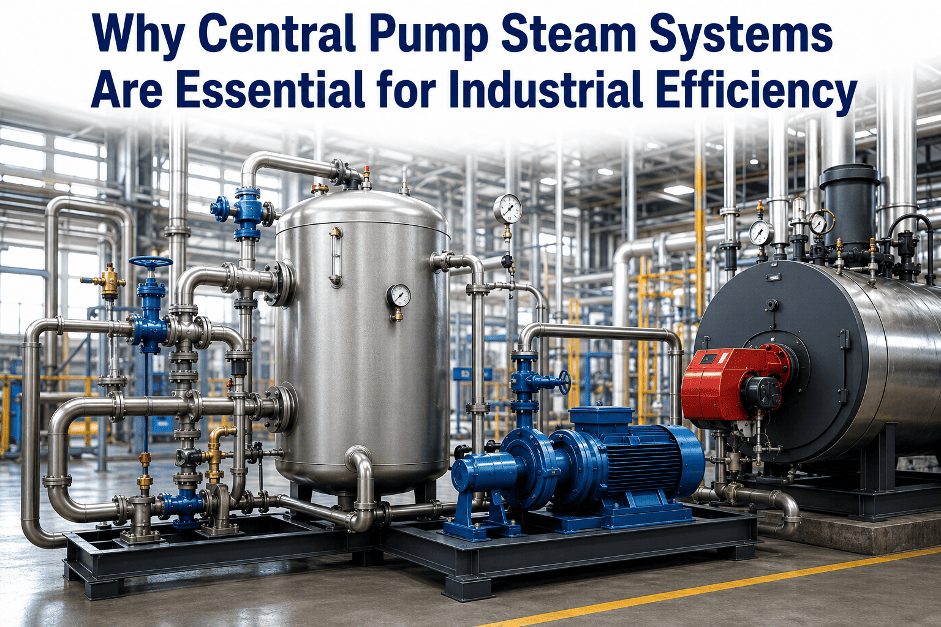
Industrial facilities depend on reliable steam systems to power equipment, transfer heat, and support production processes. Whether in manufacturing plants, food processing facilities, pharmaceutical operations, or commercial buildings, maintaining consistent steam pressure and efficient condensate removal is critical for maximizing productivity. One of the most effective ways to improve steam performance is by implementing a central pump steam system.
A properly designed central pump steam system helps recover condensate, reduce energy waste, improve equipment reliability, and lower operating costs. Combined with quality components such as Honeywell Pressuretrol controls and proper maintenance practices like drain all procedures, these systems provide long-term operational efficiency and enhanced safety.
In this guide, we’ll explain how central pump steam systems work, their key benefits, and why they play a vital role in modern industrial operations.
Table of Contents
What Is a Central Pump Steam System?
A central pump steam system is designed to collect condensate from multiple steam-using devices and return it efficiently to the boiler. Instead of allowing condensate to accumulate or be wasted, the system uses pumps to transport hot condensate back into the boiler feedwater system.
The major components typically include:
- Condensate receiver tank
- Centrifugal or boiler feed pumps
- Steam traps
- Control valves
- Pressure controls
- Level switches
- Return piping
Together, these components ensure continuous steam circulation while minimizing energy losses.
How a Central Pump Steam System Works
The operating principle is straightforward but highly effective.
Steam generated by the boiler travels through insulated piping to process equipment. As steam transfers heat, it condenses into hot water known as condensate.
Instead of discarding this valuable hot water, the central pump steam system collects it in a receiver tank. Once the water reaches a predetermined level, pumps automatically transfer it back to the boiler.
This process offers several advantages:
- Conserves treated boiler water
- Reduces fuel consumption
- Minimizes water usage
- Maintains stable boiler operation
- Improves overall steam efficiency
The entire process is automated, reducing the need for manual intervention.
Why Central Pump Steam Systems Improve Industrial Efficiency
1. Energy Savings
Condensate still contains a significant amount of thermal energy. Returning it to the boiler reduces the amount of fuel required to heat fresh makeup water.
Because condensate is already hot, the boiler requires less energy to convert it back into steam.
This translates into:
- Lower natural gas consumption
- Reduced electricity usage
- Faster steam production
- Lower utility costs
For facilities operating around the clock, these savings can become substantial over time.
2. Reduced Water Consumption
Industrial boilers consume large amounts of treated water. A central pump steam system returns much of this water to the boiler instead of sending it down the drain.
Benefits include:
- Lower water bills
- Reduced chemical treatment costs
- Less wastewater generation
- Improved environmental sustainability
Many industrial facilities recover over 80% of their condensate through efficient return systems.
3. Consistent Steam Pressure
Stable steam pressure is essential for process quality.
Pressure fluctuations can cause:
- Uneven heating
- Production delays
- Equipment wear
- Increased maintenance
A properly designed central pump steam system works alongside pressure controls like the Honeywell Pressuretrol to maintain reliable operating conditions.
The Honeywell Pressuretrol monitors boiler pressure and cycles the burner as needed, preventing excessive pressure while ensuring sufficient steam production.
This combination improves both efficiency and equipment longevity.
The Importance of Honeywell Pressuretrol
The Honeywell Pressuretrol is one of the most widely used pressure control devices in industrial and commercial steam systems.
Its primary functions include:
- Monitoring boiler pressure
- Preventing overpressure conditions
- Automatically controlling burner operation
- Improving steam system safety
- Reducing unnecessary fuel consumption
When integrated with a central pump steam system, the Pressuretrol helps ensure that steam production closely matches demand.
The result is smoother operation, fewer shutdowns, and improved process consistency.
Proper Drain All Procedures Matter
Routine maintenance is equally important for efficient steam operation.
One common maintenance practice is the drain all procedure.
Drain all refers to removing accumulated water, sludge, sediment, or contaminants from various parts of the steam system, including:
- Receiver tanks
- Low points in piping
- Boiler blowdown systems
- Moisture separators
- Condensate tanks
Failing to perform regular drain all maintenance can lead to:
- Reduced pump efficiency
- Corrosion
- Water hammer
- Steam contamination
- Equipment failure
Routine inspections and scheduled draining help extend equipment life and maintain optimal system performance.
Key Components of a Central Pump Steam System
Understanding the major components helps operators optimize performance.
Condensate Receiver
Collects returning condensate before pumping it back to the boiler.
Boiler Feed Pump
Transfers condensate from the receiver to the boiler.
Steam Traps
Remove condensate without allowing steam to escape.
Check Valves
Prevent reverse flow within the system.
Pressure Controls
Devices like the Honeywell Pressuretrol regulate operating pressure.
Level Controls
Automatically activate pumps based on water level.
Each component contributes to reliable steam delivery and efficient condensate recovery.
Common Industrial Applications
A central pump steam system is used across many industries.
Manufacturing
Steam powers production equipment, presses, and heating systems.
Food Processing
Steam supports cooking, sterilization, and cleaning operations.
Pharmaceutical Manufacturing
Clean steam is essential for sterilization and process consistency.
Textile Industry
Steam assists with dyeing, drying, and fabric finishing.
Chemical Plants
Steam supports heating reactors and process equipment.
Hospitals
Steam systems provide heating, sterilization, and laundry services.
In each application, efficient condensate recovery improves both productivity and operating costs.
Common Problems Without a Central Pump Steam System
Facilities lacking an efficient condensate return system often experience:
- High fuel costs
- Boiler cycling issues
- Water hammer
- Steam pressure instability
- Increased chemical consumption
- Frequent pump failures
- Higher maintenance costs
Many of these problems can be minimized through proper condensate management and preventive maintenance.
Best Practices for Maintaining Steam Systems
To maximize performance, operators should follow these recommendations:
- Inspect pumps regularly.
- Test steam traps on a scheduled basis.
- Perform routine drain all maintenance.
- Verify Honeywell Pressuretrol settings.
- Check condensate return temperatures.
- Repair steam leaks immediately.
- Monitor boiler water quality.
- Keep insulation in good condition.
- Lubricate pumps according to manufacturer recommendations.
- Replace worn valves and seals promptly.
Preventive maintenance reduces unexpected downtime while extending equipment life.
Environmental Benefits
Modern industries are increasingly focused on sustainability.
A well-designed central pump steam system contributes by:
- Reducing fuel consumption
- Lowering greenhouse gas emissions
- Conserving treated water
- Minimizing wastewater discharge
- Improving overall energy efficiency
Many organizations include condensate recovery as part of their energy management and environmental compliance programs.
Choosing the Right Central Pump Steam System
Every facility has unique requirements.
When selecting a system, consider:
- Boiler capacity
- Steam demand
- Operating pressure
- Condensate return volume
- Pump capacity
- Receiver tank size
- Available installation space
- Automation requirements
Working with experienced steam system professionals helps ensure the equipment is properly sized for long-term reliability.
Conclusion
A central pump steam system is far more than a condensate return solution it is a key component of an efficient, reliable, and cost-effective steam operation. By recovering hot condensate, maintaining consistent boiler performance, and reducing water and fuel consumption, these systems deliver measurable improvements in productivity and operating costs.
Integrating dependable control-specialties such as the Honeywell Pressuretrol ensures accurate pressure management, while following routine drain all maintenance procedures helps prevent corrosion, water hammer, and unnecessary equipment failures. Together, these practices create a safer, more energy-efficient steam system capable of meeting the demands of modern industrial facilities.
Whether you’re upgrading an existing steam network or designing a new installation, investing in a properly engineered central pump steam system can provide long-term benefits through improved reliability, lower maintenance costs, enhanced sustainability, and greater overall industrial efficiency.
