


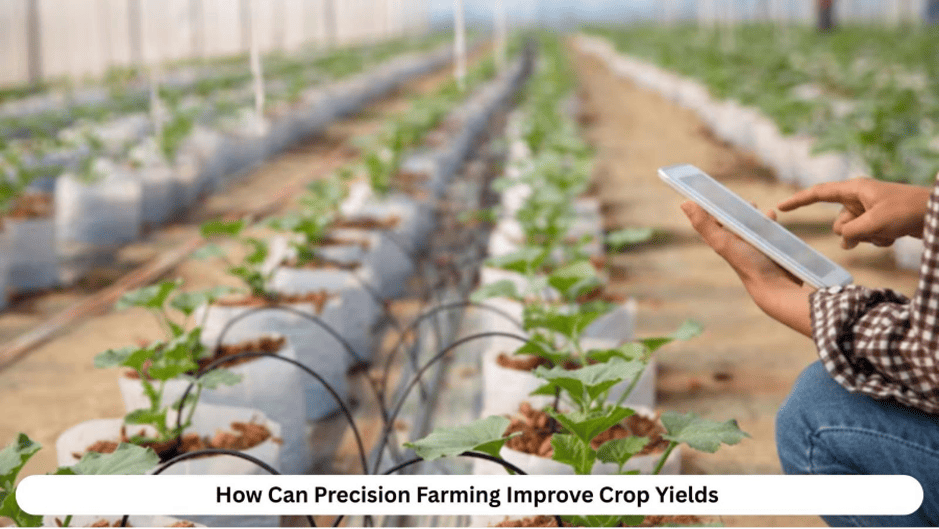
One of the greatest problems faced in agriculture is the need to feed the ever-increasing world population amidst shrinking farmland, unpredictable climatic conditions, and increased cost of inputs.
Conventional agricultural methods, though tested, are usually based on standard practices applied across entire fields, even though no two patches of soil are exactly the same.
This is where precision farming comes in, offering a smarter, data-driven approach to grow more with less. Precision farming or precision agriculture is the technique of observing, measuring, and acting on variability within the fields using technology.
Instead of treating crops as a single unit, farmers manage them at a micro level.
The result?
Healthier plants, less waste, and much better crop yields.
That being said, it is time to explore how precision farming transforms everyday agriculture practices into a smarter, yield-enhancing decision.
Table of Contents
Understanding Precision Farming
Before knowing how precision farming can help in enhancing crop yield, it is important to know what exactly it is.
At its core, precision farming in agriculture is a blend of information, technology, and agronomic knowledge. Tools such as GPS mapping, soil sensors, drones, satellite images, and farm management software can guide the farmers to make informed decisions at the right time and in the right place.
Instead of estimating when to irrigate or the amount of fertilizer to use, farmers rely on real-time insights. This targeted approach ensures crops receive exactly what they need—no more, no less.
How Precision Farming Can Boost Crop Yields
Let’s discuss some of the ways in which precision farming can enhance crop yields in practical, measurable ways.
As farms increase their crop yields through precision farming, having reliable grain storage equipment becomes essential for protecting harvested grain and maintaining its quality. Proper storage solutions can help farmers reduce post-harvest losses while ensuring crops remain in good condition until they are ready for processing or sale.
1. Optimizing Soil Health and Nutrient Management
Soil variability is one of the largest factors that influence the yield. Even in the same field, the nutrient levels, moisture retention, and organic matter can vary significantly.
Precision farming allows farmers to perform detailed mapping of their soils, to detect nutrient deficiencies or surpluses, and apply fertilizers in areas where they are needed. This improves the absorption of nutrients by plants, decreases runoff, and ensures uniform growth of crops, which leads to improved yields in the field, with additional agricultural insights and scheduling resources available at https://feedschedules.com/.
2. Smarter Water Management Through Precision Irrigation
Crop productivity can be significantly decreased by water stress. Too much irrigating will be a waste of resources, whereas excessive under-irrigating will stunt growth.
Precision irrigation involves the use of soil moisture sensors, weather forecasts, and evapotranspiration data. With such information, farmers can irrigate only when necessary and in the required quantities.
Drip irrigation and automated sprinkler systems control the distribution of water on a zone-by-zone basis to maintain optimum levels of moisture. Crops become uniform, roots become more robust, and harvests become better while conserving water.
3. Early Detection of Pests, Diseases, and Stress
Early problem detection can be considered one of the most effective benefits of precision farming. Subtle changes in plant color, canopy density, or temperature can be detected by drones and satellite imagery, often before issues are visible to the naked eye.
This allows farmers to identify pest infestations early, detect nutrient stress or disease outbreaks, and take targeted corrective action. Farmers can spray pesticides on the affected areas rather than spraying the whole field.
This reduces the destruction of crops, reduces the cost of chemicals, and protects useful organisms—all while preserving yield potential.
4. Precision Seeding for Uniform Crop Establishment
The basis of a good harvest is planting. Precision farming enhances this step by optimizing seed placement, depth, and spacing.
Farmers can use GPS-controlled planters to adjust seeding rates based on soil fertility, avoid overlaps and gaps, and ensure uniform emergence. In high-fertility areas, the maximum yields are achieved by increasing the rate of seeding.
In weaker areas, overcrowding and competition are avoided by reduced seeding. Uniform crop stands lead to better sunlight capture, stronger root systems, and higher overall productivity.
5. Real-Time Crop Monitoring and Data-Driven Decisions
Farming precision is not limited to planting. During the growing season, farmers constantly check the performance of crops with the help of digital dashboards and analytics tools.
These systems track crop growth stages, weather conditions, input applications, and yield predictions. Real-time insights allow farmers to make changes instantly, whether to address nutrient deficiencies, change irrigation schedules, or prepare against weather extremes.
This flexibility reduces losses and aids crops in achieving their potential yield.
6. Reducing Input Waste While Maximizing Output
One of the most compelling benefits of precision farming is its efficiency. By applying inputs only where and when they’re needed, farmers reduce waste and improve return on investment.
Key efficiency gains include lower fertilizer and pesticide usage, reduced fuel consumption, and less labor redundancy. These savings allow farmers to reinvest in better seeds, technology, or soil health initiatives—creating a positive feedback loop that continues to boost yields season after season.
7. Improving Harvest Accuracy and Yield Analysis
Precision farming also enhances the harvesting process. Yield monitors on harvesting equipment collect detailed data on crop output across different zones of a field.
This information helps farmers identify high- and low-performing areas, evaluate the effectiveness of farming practices, and plan improvements for future seasons.
By understanding exactly where yields excel or fall short, farmers can fine-tune strategies year after year, leading to consistent yield growth over time.
The Future of Crop Yields Lies in Precision
Precision farming is no longer a concept reserved for large industrial farms. As technology becomes more accessible and affordable, farmers of all sizes can benefit. Whether it’s a small sensor guiding irrigation decisions or advanced analytics shaping entire crop plans, precision agriculture empowers farmers to make smarter choices.
By optimizing inputs, monitoring crops in real time, and responding proactively to field variability, precision farming transforms how food is grown. The result is higher yields, healthier crops, reduced waste, and a more resilient agricultural system.
In a world where every harvest matters, precision farming isn’t just an upgrade—it’s the future of productive, sustainable agriculture.
