


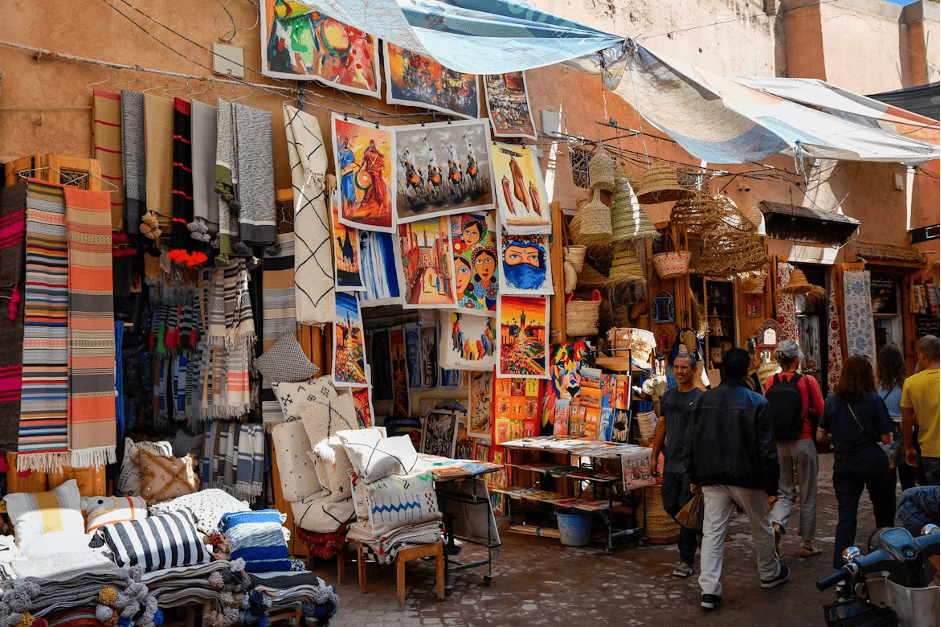
Morocco doesn’t get talked about enough in import circles, and that’s kind of strange when you think about it. The country sits right at the mouth of the Mediterranean, has a free trade agreement with the US that’s been active since 2006, and produces everything from hand-knotted Beni Ourain rugs to remanufactured engine blocks. Yet most American importers still default to China or Vietnam without ever running the numbers on a Moroccan alternative. So let’s actually run them.
Table of Contents
Rugs
Berber rugs have become something of an Instagram darling over the past decade. West Elm, Anthropocene, a hundred Etsy boutiques — they’ve all leaned into that “authentic Moroccan textile” story, and buyers eat it up. In the US, you’ll see a single Beni Ourain go for anywhere from $1,200 to three grand in retail. But if you’re buying direct out of Morocco, you’re usually looking at $150 to $400 wholesale — though that obviously jumps around depending on the size and how tight the weave is.
The catch is volume and consistency. These rugs are woven by hand, traditionally by women in Atlas Mountain villages working through cooperatives, and production is slow — weeks per piece. Sourcing at scale means juggling dozens of small suppliers instead of one factory, and quality control becomes a genuine headache. One batch might be flawless; the next might have color inconsistencies because the wool came from a different flock.
Freight-wise, rugs are light and compressible, which actually works in an importer’s favor. A 40-foot container can hold hundreds of compressed medium-size rugs without much trouble, which keeps per-unit shipping costs low. If you’re bringing in bulk, get your cargo shipping from Morocco to the USA priced out early — way before you sign supplier contracts. It’ll save you a surprising amount of headache on the budget side. Transit usually runs around 2 weeks to the East Coast (depending on routing), and that’s a long stretch to have your cash tied up in a container somewhere in the Atlantic.
Automotive components
Morocco’s annual vehicle production capacity reached roughly one million units in 2025. Most of that output comes through Renault’s Tangier plant and a rapidly expanding Stellantis operation near Kenitra. That industrial base didn’t appear overnight — it’s the result of two decades of deliberate government investment in automotive supply chains, tax incentives for parts manufacturers, and a labor force that’s genuinely skilled in precision machining.
For importers, this opens a different kind of opportunity: remanufactured engines, transmission components, wiring harnesses, and increasingly, components and materials linked to the EV battery supply chain. Rugs have way juicier per-unit markups — no question. The spread between Morocco and US retail can be massive. But auto parts win on everything else: scale, standardized production, and repeat orders.
The ROI verdict
It’s a trade-off. Fat margins on something slow and labor-intensive, or slimmer margins on something that actually scales without the headache. Pick your poison. Rugs win on emotional appeal and headline markup. Engines and parts win on consistency, container efficiency, and B2B relationships that don’t evaporate after one Instagram trend cycle.
A hybrid approach isn’t unusual either — some importers run rugs as a higher-margin front-facing brand while quietly building steadier revenue through automotive components in the background. Whichever path gets chosen, logistics coordination matters just as much as sourcing. Platforms like GetTransport have made it easier for smaller importers to compare freight quotes without needing an in-house logistics team, which matters a lot when margins on one side of the business are thin and every dollar of shipping cost counts double.
There’s no universal winner here. But anyone doing the math seriously should probably stop treating Morocco as a niche curiosity and start treating it as what it actually is: a legitimate manufacturing base with two very different, very real opportunities sitting right next to each other.
