


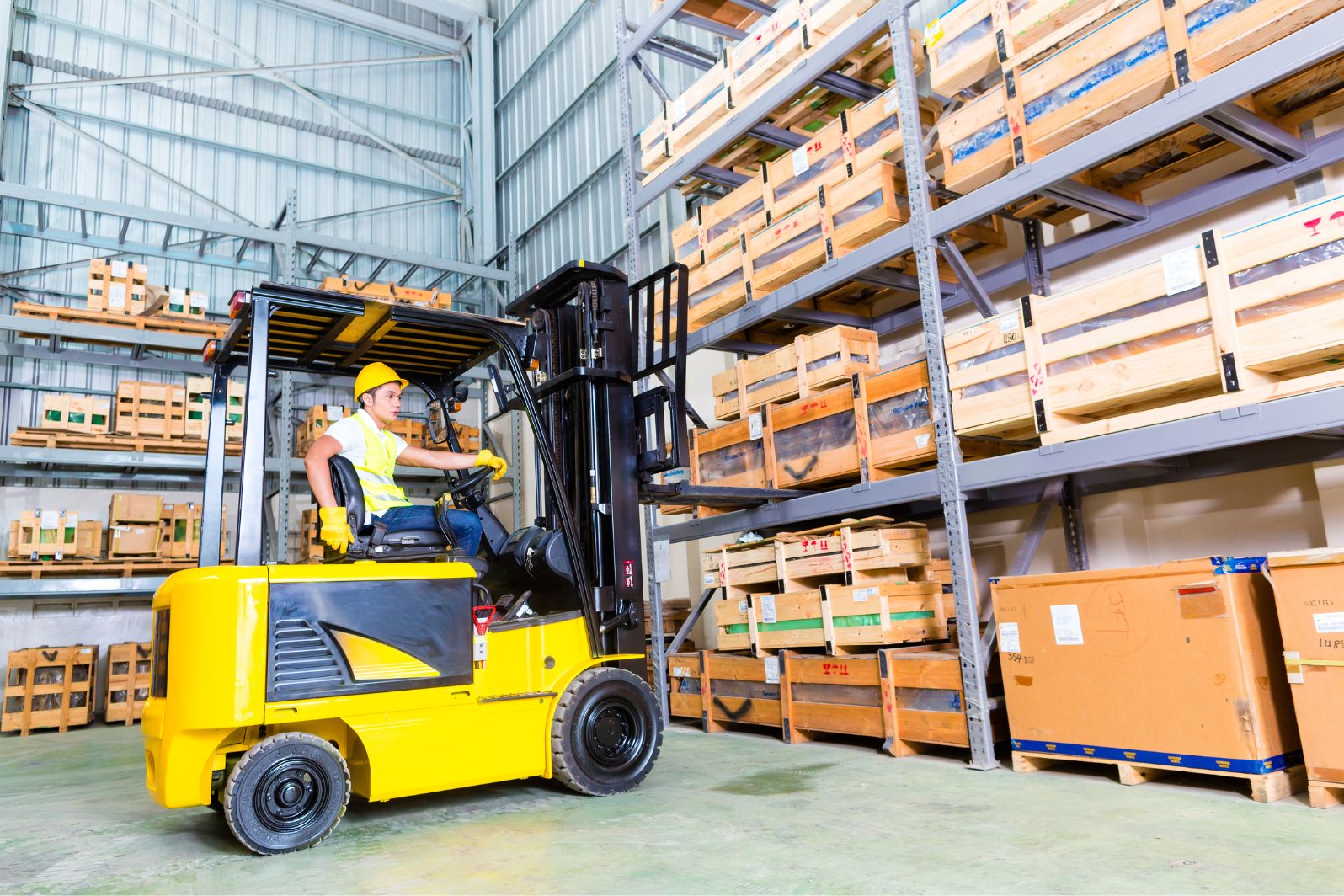
Ever wondered how the world’s warehouses keep moving at lightning speed? It’s not magic-it’s the power of forklifts.
These industrial titans are the unsung heroes of logistics, lifting and transporting heavy loads with ease. But what really makes them tick? From their towering masts to the sturdy forks, every part has a story.
Buckle up as we take a deep dive into the parts of a forklift, where engineering meets efficiency. Let’s get into it!
Table of Contents
The Mast: The Backbone of Lifting Power
The mast is the heart of a forklift, supporting its power to lift heavy loads. It consists of three main parts:
The Uprights
The uprights are essentially the vertical steel bars that frame the mast, providing the necessary support for the lifting mechanism. They play a critical role in determining the maximum height that the forklift can reach while lifting a load.
Furthermore, these components allow for the smooth vertical movement of the forks, thanks to their sturdy yet flexible design.
The Inner and Outer Rails
The inner and outer rails are integral to the mast’s functionality. It aids in the lifting process by guiding the vertical movement of the carriage and forks.
Structured within the uprights, these rails can be telescopic, allowing for adjustable height that accommodates different load sizes. This adjustability not only enhances the forklift’s versatility but also ensures the stability of loads during transport.
The Rollers
The rollers play a pivotal role in the smooth operation of the mast’s lifting and lowering functions. They ensure a controlled and steady movement between the inner and outer rails, minimizing friction and wear.
Without these crucial components, the precise maneuvering and placement of loads would be significantly more challenging.
Forks: The Muscles of Movement
The forks, or tines, are the most recognizable part of a forklift. They are responsible for gripping and lifting loads, making them the vital muscles of movement.
The blade, or the lower part of the fork, is where the load rests. Its shape and width are designed to distribute weight evenly for maximum stability during transport.
The shank connects the blade to the rest of the forklift. It needs to be robust enough to withstand heavy loads while also being flexible enough to accommodate different load sizes.
Finally, the heel is the curved part of the fork that provides additional support and stability for loads. It also allows the forklift to tilt slightly backward, preventing loads from sliding off during transport or placement.
Whether you’re replacing worn-out parts or upgrading for better performance, choosing the right forks is essential for safety and efficiency. Find out more about the best forklift parts for your needs to keep your operations running smoothly.
Counterweight: Balancing the Scales
This is usually a heavy block of iron or steel placed at the rear of the forklift, opposite the mast. When a load is lifted by the forks, it creates an imbalance that can cause it to tip forward.
The counterweight acts as a counterbalance, preventing this from happening. Its weight is carefully calculated and tailored to each forklift’s lifting capacity.
This ensures that it can safely handle the intended loads without compromising stability or safety.
The Power Source: Fueling the Beast
Electric forklifts are powered by rechargeable batteries, making them more eco-friendly and efficient, especially indoors. On the other hand, combustion engine forklifts use:
- gasoline
- diesel
- propane
Regardless of the type of fuel used, these power sources are responsible for driving the wheels and powering other functions, such as lifting and steering. Plus, they are easy to refill or recharge, keeping the forklifts running smoothly.
Tires and Wheels: Where Rubber Meets the Road
Smaller solid rubber tires are suitable for indoor use, while larger pneumatic or cushion tires are better for outdoor or rough terrain applications. Proper tire selection is crucial to ensure maximum:
- stability
- maneuverability
- longevity
In addition, the wheels are usually made of steel or other strong alloys to withstand heavy loads and constant movement. They also need to be able to turn smoothly for optimal handling.
Moreover, some forklifts have multiple sets of wheels, with the front ones used for steering and the rear ones for support. This allows for better control and weight distribution while carrying loads.
Safety Features: Ensuring Smooth Operations
Modern forklifts are equipped with various safety features to ensure smooth operations and prevent accidents. These can include:
- safety lights
- alarms
- horns
- rearview mirrors
- seatbelts
However, operators must undergo proper training to handle forklifts safely and efficiently. This ensures the protection of both the operator and those working in the surrounding areas. Not only that! Forklifts also have:
- load backrests
- overhead guards
- tilt locks
These features work together to create a safe working environment for everyone involved.
Engine Components: Keeping the Heart Pumping
The engine is the powerhouse of a forklift, and it contains various components that keep it running smoothly. These include:
- air filters
- spark plugs
- oil filters
- carburetors or fuel injectors
Each must be regularly maintained and replaced to ensure optimal performance and efficiency. Failures in these components can lead to breakdowns and costly repairs. So, taking care of the engine is crucial in maximizing a forklift’s lifespan.
Hydraulic System: The Circulatory System
The hydraulic system is like the circulatory system of the human body. It consists of:
- pumps
- cylinders
- hoses
- valves
These components work together to provide power and control for lifting and other functions. It also uses pressurized fluid to move the mast up and down, as well as tilt it backward or forward.
Its design allows for smooth and precise movements, essential for handling delicate loads.
Starter and Ignition: The Spark of Life
The ignition and starter are responsible for kicking off the engine, providing the initial spark of life to a forklift. They come in various types, including electric and manual options.
Electric starters are usually found on combustion engine forklifts, while manual ones are typically seen on older models or less powerful electric forklifts. Regardless of the type, these components must be in good working condition to start and run the forklift smoothly.
Exploring the Key Parts of a Forklift
We’ve taken a grand tour of the essential parts of a forklift, peeking under its hood and getting to know what keeps it moving. From the sturdy mast to the heart of its power in the engine, it’s clear that these machines are the marvels of modern engineering.
Did you get a spark of interest from our forklift deep dive? If you’re raring to get behind the wheel or just craving more info, reach out today!
Did you find this article helpful? Check out the rest of our blog now!
