


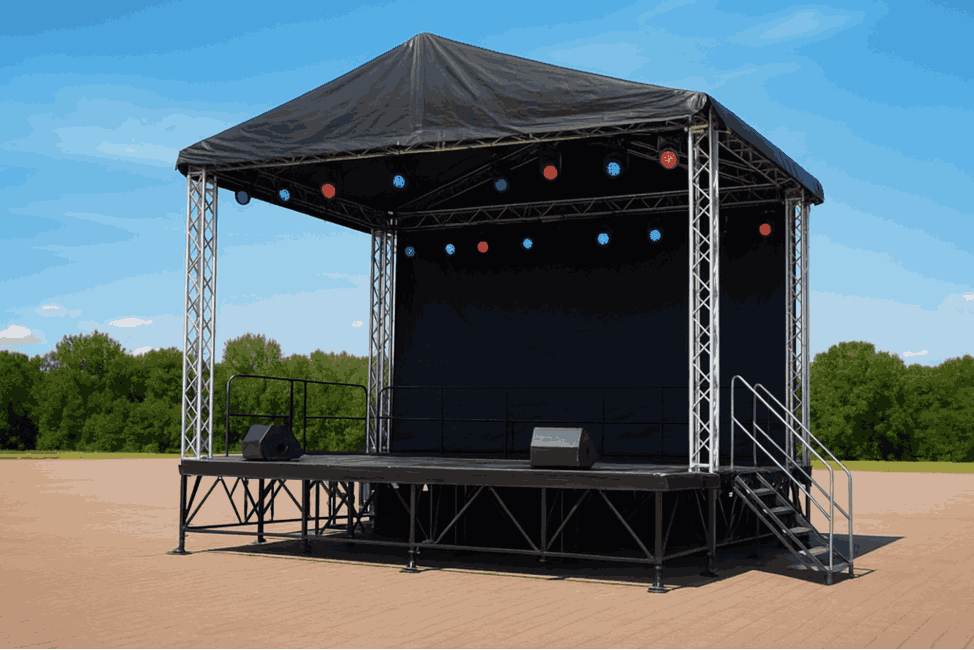
In the fast-paced world of live entertainment, where precision, timing, and audience experience intertwine, the structure beneath the spotlight—the stage—plays a pivotal role. Traditionally, concert organizers and event managers have relied on massive, fixed platforms that required teams of specialists, heavy equipment, and days of preparation. However, innovation has redefined what’s possible. The modern concert stage setup has been revolutionized by the rise of the portable stage, a dynamic solution that brings flexibility, efficiency, and creativity to live productions. As events grow more diverse and mobile, understanding this shift is crucial for anyone involved in the entertainment, corporate, or performance industries.
This evolution toward mobility and modularity reflects not just a technological change, but also a broader transformation in how live events are conceived and delivered. Whether you’re an event production manager orchestrating a music festival, a school hosting a graduation, or a touring artist performing across cities, the way stages are designed and deployed can make or break the experience—for both audience and performer.
Table of Contents
The Evolution of Stage Design and Setup
For decades, stage design was synonymous with permanence. Early event platforms were constructed from wood, steel, or reinforced aluminum and installed manually. Each setup was an engineering feat—heavy, time-consuming, and logistically complex. Event organizers often faced trade-offs: investing heavily in labor and transport or compromising on size and presentation.
As the live event industry expanded—spanning from small-scale performances to global music tours—the need for faster, lighter, and safer stage systems became undeniable. This demand fueled innovations in collapsible structures, modular designs, and adjustable surfaces that could be easily transported and assembled without specialized machinery. The concept of the mobile stage emerged as an answer to an age-old problem: how to bring professional-grade staging to any location with minimal effort and maximum flexibility.
Today, we stand at the intersection of design efficiency and creative freedom. The shift from static to modular platforms is not just a convenience—it’s a reimagination of what it means to perform anywhere.
Why Simplifying Stage Setup Matters
A live event is a symphony of coordination—lighting, sound, logistics, and crowd management. When the stage setup becomes a bottleneck, the entire operation suffers. Simplifying stage assembly through modern systems has wide-ranging benefits: reduced setup time, improved safety, lower labor costs, and increased venue turnover.
For example, a performance stage that can be assembled in under an hour instead of half a day can drastically improve event profitability. Venues can host multiple events in a single day, mobile performers can tour more efficiently, and community organizers can stage professional-grade productions without extensive training or resources.
Moreover, simplification enhances creative adaptability. A modular setup allows designers to experiment with stage configurations—curved layouts for fashion shows, tiered levels for orchestras, or open-ground structures for outdoor festivals. This flexibility transforms how performers connect with audiences and how spaces can be repurposed for different themes and events.
Yet, these benefits come with their own set of challenges. Simplified systems must still uphold high safety standards, withstand dynamic loads, and remain visually appealing under professional lighting and camera work. Balancing speed with structural integrity remains one of the industry’s most critical design challenges.
Key Factors Driving the Shift Toward Mobility
- Efficiency and Time Management
The most significant advantage of modern stage systems is speed. Traditional setups can take days of coordination and hundreds of man-hours. In contrast, a modular platform can be unfolded and locked into position in minutes. This efficiency reduces overall event costs, allowing even small organizations to host professional performances. - Portability and Scalability
The essence of the modular stage lies in its flexibility. Lightweight aluminum framing, foldable decks, and stackable units enable organizers to transport and store the entire structure in compact spaces. Whether hosting a small indoor recital or a large outdoor concert, these stages can scale effortlessly. - Safety and Stability
Despite their lightweight nature, modern mobile platforms are engineered for stability. Reinforced joints, anti-slip surfaces, and adjustable legs allow them to perform reliably on uneven terrain. The focus on engineering precision ensures that simplified setup does not come at the expense of safety—a critical consideration for large audiences and professional performers alike. - Aesthetic and Functional Design
Today’s event producers demand not only functionality but also aesthetic appeal. Stages are often integrated with lighting rigs, LED screens, and branding elements. Modular systems support this need through customizable layouts and accessory compatibility. Function meets form, allowing brands and artists to express their identities through spatial design. - Environmental Responsibility
Sustainability is no longer optional. The event industry’s environmental footprint—from shipping to material use—is under scrutiny. Portable platforms reduce waste by replacing disposable or single-use setups with durable, reusable alternatives. They also minimize transport emissions by lowering weight and packing volume.
The Trade-Offs in Simplifying Stage Setup
As with any innovation, the shift toward modular systems brings trade-offs. While mobility and efficiency enhance accessibility, there are compromises that event organizers must navigate carefully.
1. Structural Limitations:
Lightweight materials improve transportability but can impose load restrictions. A fixed event stage may support extensive truss systems, pyrotechnics, or heavy backline equipment with ease, while a mobile system must balance weight with portability. Engineers mitigate this through reinforced aluminum and smart load distribution, but high-end productions may still require supplemental reinforcement.
2. Customization vs. Universality:
A permanent stage allows for complete customization—height variations, embedded wiring, and unique geometry. Modular systems, on the other hand, rely on standardized units. While this ensures interchangeability and ease of assembly, it limits extreme custom designs unless multiple components are combined creatively.
3. Cost Considerations:
At first glance, portable platforms may appear more expensive than renting or building fixed setups. However, long-term cost analysis often tells a different story. Reusability, lower transport costs, and reduced labor expenses typically offset the initial investment. Businesses must weigh short-term budgets against long-term operational efficiency.
4. Durability vs. Weight:
Achieving a lightweight yet durable frame is an engineering challenge. Heavier materials like steel ensure stability but reduce portability, while lighter composites can sacrifice resilience. The most advanced systems employ high-grade aluminum alloys that offer the best balance, but at a premium price.
5. Aesthetic Flexibility:
Although modular platforms can achieve impressive designs, they may not replicate the architectural grandeur of a custom-built stage. Designers often need to rely on creative arrangements, lighting, and visual elements to achieve a comparable visual impact.
These trade-offs emphasize that simplifying stage setup is not about choosing minimalism over sophistication—it’s about redefining how technology serves creativity and efficiency.
Challenges in Different Stage Approaches
While traditional and modern stage systems both serve the same fundamental purpose, their underlying logistics differ significantly. Understanding these challenges helps decision-makers select the right approach for their event type and scale.
Fixed Stages:
Permanent installations offer unmatched stability and aesthetic control but are limited by geography. They require significant investment in materials, construction, and permits. Furthermore, once installed, they lack flexibility. For organizations that host diverse events, a fixed setup may become a constraint rather than an asset.
Temporary or Rented Stages:
Renting staging equipment offers convenience for occasional events, but recurring rental costs accumulate quickly. Moreover, scheduling conflicts or limited availability can complicate planning. Rental setups often rely on manual assembly, which increases labor and time.
Mobile and Modular Stages:
While modern systems offer convenience, they require precision handling. Incorrect setup or poor maintenance can compromise safety. Event crews must be trained to understand locking mechanisms, load limits, and alignment systems to ensure reliability. Additionally, outdoor use demands weather-resistant materials and anti-corrosion coatings to withstand environmental conditions.
Each approach presents its own logistical and financial dynamics. The ideal choice depends on the event frequency, mobility requirements, and available resources.
The Broader Impact on the Live Event Ecosystem
The transformation toward modular mobility is reshaping not only technical setups but also the broader economics and accessibility of live events. Smaller venues and independent artists—once priced out of professional-grade infrastructure—now have the tools to create immersive performances. Community centers, educational institutions, and local festivals can host high-quality productions with limited budgets and manpower.
Moreover, the global expansion of pop-up events, outdoor activations, and branded experiences has further fueled demand for adaptable structures. In an era defined by experiential marketing and audience engagement, flexibility is king. A mobile platform allows brands to stage events in unconventional locations—beaches, rooftops, city squares—without the logistical nightmare of permanent construction.
From a business standpoint, the adoption of such systems creates ripple effects across supply chains. Manufacturers invest in advanced materials; logistics companies develop specialized transport solutions; and rental businesses diversify inventories with modular options. Collectively, this ecosystem fosters innovation and competition, leading to better products and more accessible pricing.
Balancing Technology, Creativity, and Practicality
At the heart of this evolution lies a delicate balance between technology and artistry. Stages are not just physical structures—they are storytelling platforms. A well-designed performance stage communicates emotion, scale, and purpose. Simplified setup must therefore support, not overshadow, the artistic intent.
This balance depends on thoughtful integration:
- Technology provides strength, modularity, and automation.
- Creativity drives design, flow, and audience immersion.
- Practicality ensures affordability, safety, and repeatability.
When these elements converge, the result is a seamless production that captivates audiences without compromising on efficiency.
However, decision-makers must remain aware of the broader implications of their choices. The impact extends beyond convenience—it influences safety standards, environmental sustainability, and the long-term economic health of the event industry. Prioritizing quick setups should not undermine structural quality or worker safety. Similarly, selecting the cheapest materials can create maintenance challenges down the line. Strategic investment in durable, responsibly sourced equipment yields dividends in performance and reliability.
The Future Outlook for Live Event Infrastructure
The continued evolution of stage technology reflects the event industry’s growing emphasis on adaptability. As global entertainment trends lean toward immersive experiences, event designers are looking for systems that combine flexibility with spectacle. We can expect further innovations in lightweight composites, modular locking systems, and digital integration—such as smart leveling or automated height adjustments.
Furthermore, as remote work and hybrid events reshape audience interaction, staging systems will increasingly need to accommodate multimedia and streaming equipment. Platforms that support integrated cable management, LED panels, and audio-visual mounts will become the new standard.
In addition, sustainability will drive product design. Manufacturers are already experimenting with recyclable alloys, low-impact coatings, and packaging that minimizes waste. The next generation of mobile systems will not only enhance performance but also align with environmental responsibility.
Wrapping Up
Simplifying concert stage setup is more than a technical convenience—it’s a paradigm shift that empowers creativity, efficiency, and accessibility in the live event world. The transition from traditional fixed platforms to modern, modular systems reflects a deeper understanding of how technology can enhance, rather than limit, performance.
A mobile stage does more than provide structure—it enables connection. It allows music to travel beyond urban centers, brings culture to smaller communities, and supports organizations that once lacked the means to host professional-grade events. Yet, embracing this future requires acknowledging the trade-offs: balancing lightweight portability with strength, rapid setup with safety, and cost with longevity.
The live event industry thrives on innovation and adaptability, and the modular approach embodies both. By choosing systems that simplify setup while maintaining integrity and design freedom, organizers can meet the demands of modern audiences and venues alike.
In the end, the stage—no matter how portable or permanent—remains the heart of performance. Its evolution toward flexibility mirrors the industry’s pursuit of inclusivity, creativity, and excellence, ensuring that the show can truly go on—anywhere, anytime.
