


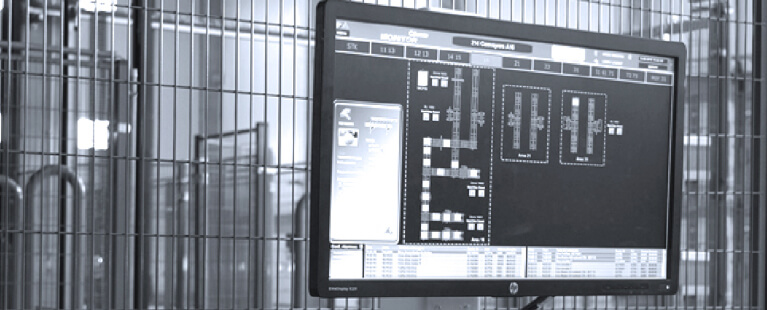
In a world where speed, accuracy, and efficiency are prominent in supply chain management, Warehouse Management Software (WMS) emerges as a critical solution for businesses. This blog explores the WMS, its meaning, benefits, types, and the smart technologies that are transforming the modern warehousing management system.
Table of Contents
What is Warehouse Management Software?
A Warehouse Management Software (WMS) is a powerful software designed to manage daily warehouse operations seamlessly. It takes control from the moment goods enter a facility until they exit. WMS is the backbone of supply chain management, offering real-time insights and streamlining processes.
Key Benefits of Warehouse Management Software
Let’s explore the benefits of WMS:-
- Operational Efficiency
Warehouse management software automates warehouse processes, reducing errors and enhancing overall efficiency. It eliminates duplicate work and improves workflow, ensuring faster order fulfillment. In traditional warehousing, manual processes often lead to errors, delays, and inefficient resource utilization. With WMS, these challenges are addressed comprehensively. From the moment goods are received, the system optimizes the entire process. For example, it can automatically validate incoming goods against purchase orders, eliminating the need for manual reconciliation. This reduces errors and speeds up the receiving process, a task that was often labor-intensive and error-prone.
- Cost Reduction
It minimizes waste by optimizing inventory placement and tracking perishable items. Warehouse management software also maximizes space utilization, saving costs on storage. Inventory management is an important aspect of warehousing, and WMS excels in this area. For businesses dealing with date-restricted or perishable stock, the system can identify which items need to be picked first or require special attention. This minimizes waste and ensures that goods are handled efficiently. Additionally, WMS helps in determining the most effective use of warehouse space. It can create floor plans and optimize the placement of pallets, shelves, and equipment to run operations at peak efficiency, reducing storage costs significantly.
- Real-time Visibility
Warehouse management software employs technologies like barcoding and RFID to provide real-time inventory insights, resulting in accurate demand forecasts and improving traceability. One of the standout features of WMS is its ability to provide real-time visibility. Using technologies such as barcoding, RFID tagging, or sensors, the system tracks the movement of goods as they enter the warehouse, move within it, and leave for their destination. This real-time insight into inventory is invaluable for businesses. It enables them to create more accurate demand forecasts, run just-in-time inventory strategies, and improve traceability, which is crucial in case of product recalls or quality control issues.
- Labor Management
It helps in labor forecasting and task optimization by creating an organized and efficient work environment. Labor management is a crucial aspect of warehousing, and WMS plays a significant role in optimizing labor resources. The system can forecast labor needs, create efficient schedules, and optimize travel time within the warehouse. Furthermore, it can assign tasks to employees based on factors such as skill level, proximity to the task, and workload. This ensures that the right employee is assigned to the right job, improving overall efficiency and employee morale.
- Customer & Supplier Relations
Warehouse management software ensures accurate order fulfillment, leading to satisfied customers. Suppliers benefit from reduced wait times, fostering better relations. Customer satisfaction and strong supplier relationships are essential in the world of warehousing. WMS contributes to both aspects. Streamlining operations and reducing errors in picking and shipping goods also improves order fulfillment accuracy. This means customers receive their orders complete, on time, undamaged, and with accurate invoices. Such reliability enhances customer satisfaction and loyalty while also boosting your brand reputation. Additionally, suppliers benefit from reduced wait times at loading bays and docks, leading to smoother transactions and improved relationships.
How Warehouse Management Software Works
The warehouse management software functions as follows:-
- Receiving and Put-away:
WMS optimizes item processing, automating the validation of incoming goods against purchase orders. It supports RFID technology for error-free receipts.
- Inventory Management:
Real-time visibility, tracking, cycle counting, and demand forecasting are WMS’s strengths. It helps in efficient stock allocation and improves order accuracy.
- Order Picking & Packing:
WMS guides efficient product retrieval and supports picking technologies like RF, pick-to-light, and robotics, enhancing order fulfillment.
- Shipping:
It integrates with transportation management systems, automating shipment documentation and real-time tracking.
- Labor Management:
WMS provides insights into labor-related costs, schedules, and task assignments, promoting a productive and organized work environment.
Look at Some Smart Warehouse Technologies
Smart warehousing technologies encompass a range of innovations designed to enhance the efficiency, accuracy, and scalability of warehouse operations. Some of these are as follows:-
- Warehouse Automation:
Warehouse automation involves the use of robotics and automated systems to streamline various warehouse processes. These technologies significantly reduce errors and enhance scalability. Robotics and automation systems are employed to automate repetitive and labor-intensive tasks within the warehouse, such as product sorting, order picking, and packing. This reduces the reliance on manual labor and minimizes the chances of human errors. Automated Storage Systems can easily adapt to changing demands. As order volumes increase, warehouses can expand their automation infrastructure to meet growing requirements without the need for a proportional increase in human labor.
- Mobile Devices
Mobile devices, including smartphones, tablets, and barcode scanners, play a crucial role in empowering frontline warehouse workers. Mobile devices provide workers with instant access to critical warehouse data. They can view inventory levels, order statuses, and other essential information on the go, also through the use of mobile devices to communicate with colleagues and the warehouse management system. This facilitates efficient collaboration and task assignment. Mobile devices often include built-in barcode scanners, allowing workers to quickly scan product barcodes for inventory tracking and order verification.
- AI & IoT (Internet of Things)
Artificial intelligence (AI) and the Internet of Things (IoT) are integrated into warehouse operations to provide real-time data and predictive analytics. IoT sensors placed throughout the warehouse collect data on various aspects, including temperature, humidity, equipment status, and inventory levels. This data is transmitted in real-time, providing insights into current conditions. AI systems analyze IoT data to make predictions and recommendations. For example, AI can predict equipment failures, optimize routing, and dynamically adjust inventory allocation based on demand fluctuations. Further, AI and IoT work together to create a demand-driven warehousing model.
Conclusion
Warehouse Management Software (WMS) is a critical aspect of modern warehousing, revolutionizing operations to meet the demands of today’s fast-paced supply chains. By automating processes, optimizing labor, and integrating smart technologies like AI, IoT, and robotics, WMS enables businesses to deliver efficient, accurate, and responsive warehouse operations. As warehousing continues to evolve, WMS will remain at the forefront of innovation, driving efficiency and excellence in the field.
