


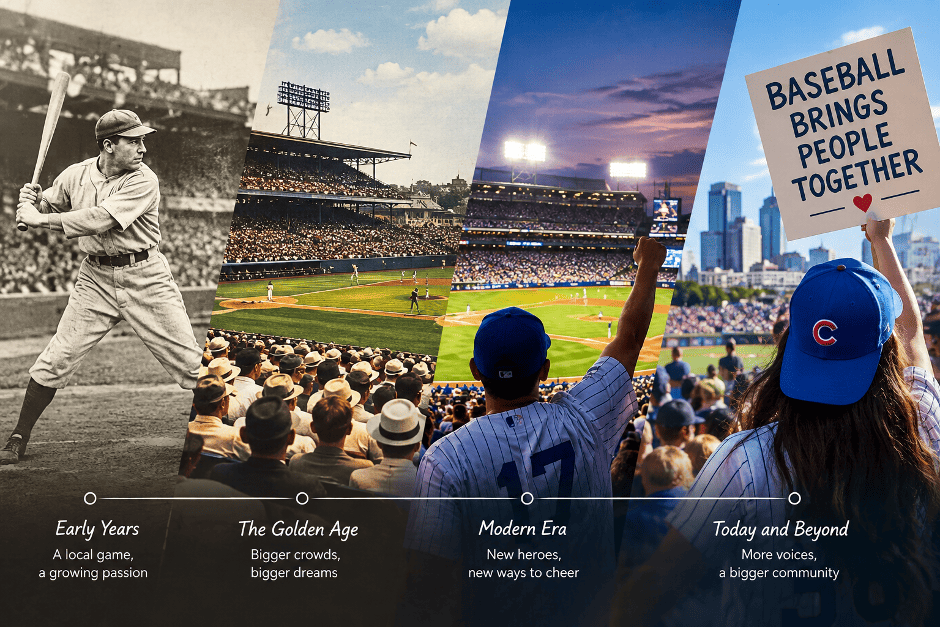
Baseball is a whole different ballgame. The rules have changed, the players have changed, the way games are watched has changed, and even the way fans talk about the sport has changed.
The interesting thing is that baseball has never really stopped being a part of American culture. It has simply found a way to fit into America.
A person watching a game in the 1950s would probably recognize the sport in a different way. Nine players, a bat, a ball, a glove, and a scoreboard. The experience around that game would feel very different from what a young fan experiences today.
So, how did baseball culture move from there to here?
Table of Contents
Baseball Was Once More Than a Sport
Baseball was a part of everyday life in America for much of the 20th century. Going to a baseball game was a family activity. Listening to a game on the radio was something people did every day. Players became well known to people even if they didn’t watch every game.
The sport was also closely connected to major moments in American history. One of the clearest examples is Jackie Robinson.
On April 15, 1947, Robinson broke the major league color barrier. He was the first African American to play in the major leagues since the 19th century. His moment was more than a baseball moment. It was part of the story of race and civil rights in America.
That history is important because the culture of baseball wasn’t always as inclusive as people think when they hear the phrase “America’s pastime.” The Negro Leagues had their famous players, teams, and fans. Black players were not allowed in league baseball.
The game eventually changed, and the culture around it changed with it.
Baseball Became More Diverse and International
One of the changes in baseball culture has been diversity.
Jackie Robinson’s breakthrough opened an important door, but it wasn’t the end of the story. Over the decades, players from different racial, ethnic, and national backgrounds became increasingly visible at the highest levels of the sport.
Chicago has its own important chapter here. Ernie Banks became the first Black player to play for the Cubs in 1953 and went on to become one of the defining figures in Chicago baseball history.
Today a young fan can grow up watching stars from the United States, Japan, the Dominican Republic, Venezuela, Cuba, Puerto Rico and many other places. That international influence has become one of baseball’s defining characteristics.
It has changed fandom, too. A fan doesn’t necessarily support a player simply because he plays for the local team. Young fans can follow a favorite player across social media, watch his highlights and learn about his career even if he’s thousands of miles away.
The Ballpark Became an Experience
There was a time when going to a baseball game was about watching the game.
That is still the main reason people go, obviously. But today’s ballparks offer much more.
Food has become a part of the experience. Music plays a role. There are nights, social spaces, giveaways, interactive areas, and plenty of opportunities to take photos or share the experience online.
MLB has openly focused on making ballparks and the overall experience more attractive to younger audiences, including creating social spaces and stand-up areas.
For fans, the question is not always just “Did the team win?”
It is also “Did I have time?”
That may sound like a change, but it says a lot about modern sports culture.
Baseball Left the Radio and Entered the Phone
Technology has probably changed baseball fandom more than anything else.
Older generations often experienced baseball through radio broadcasts, newspapers, and television. Today’s fans can follow a game through an app, watch highlights immediately, check statistics while sitting in the stands, and see what players are posting on social media.
MLB.tv has been streaming games since 2002, while social platforms have given players and teams direct access to fans.
That has created a different relationship between athletes and supporters.
A player used to seem distant. You might see him during a game, read an interview in the newspaper, and know very little about his life outside baseball.
Now you might see his workout video in the morning, a meal post in the afternoon and a game highlight at night.
Baseball isn’t just something fans watch anymore. It’s something they constantly interact with.
Young Fans Want to Be Part of the Culture
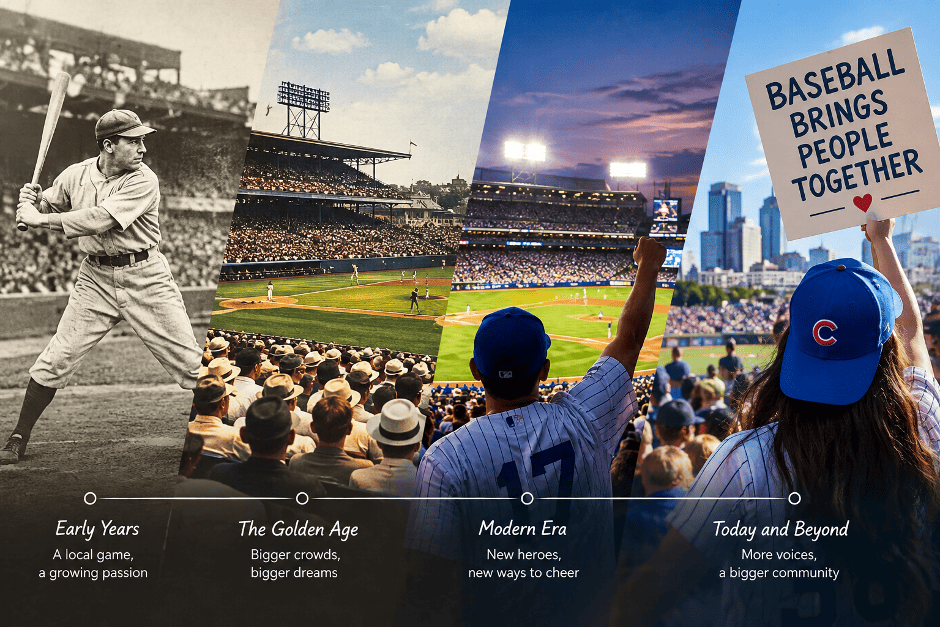
Today’s younger baseball fans don’t just watch sports. They live inside sports culture. They make memes. They argue about players online. They collect jerseys and caps. They build fantasy teams. They post pictures on game day. They talk about stats. They talk trades with people they’ve never met.
Fan gear has become more than clothing. It’s part of who they’re. A jersey or team shirt isn’t something you wear when you go to the ballpark. It can be a part of your daily outfit.
For fans in a baseball city, wearing team merchandise can also feel like a small way of representing where you’re from. That’s one reason stores such as Sports World Chicago fit naturally into the wider fan culture. Team apparel isn’t just merchandise. For plenty of fans, it’s connected to memories, family traditions and the feeling of being part of a particular baseball community.
The Game Itself Has Changed Too
Baseball culture has not changed because of new technology or new fashion. The real experience of watching a baseball game has changed.
The baseball league has introduced rules that partly aim to speed up the game and add more action. Younger people also learn about baseball through digital clips, fantasy sports, video games and other kinds of media.
Still baseball keeps something that many modern entertainment options cannot give: time. A baseball game can slow down. A pitcher can take time to work through an inning. Fans can talk to each other between pitches. You can arrive early, eat a snack, watch batting practice and stay after the last out. That is part of what makes baseball special.
Baseball Is Becoming More Global
Perhaps the biggest cultural change is that baseball no longer feels like it belongs to America.
MLB has turned into a game that is played all over the world and players from different countries have become big stars. As an example, MLB said there was increased international viewership for the 2024 season with dramatic growth in Asia and Latin America.
That creates an interesting cycle.
A young fan in the United States might follow a superstar. A fan in Japan might follow a team. Someone in the Dominican Republic might grow up hoping to play in the leagues.
The sport moves in both directions.
What Hasn’t Changed?
For all these changes the heart of baseball is surprisingly familiar.
Kids still play catch in parks. Families still go to games together. Fans still argue about whether a player is overrated. People still keep old caps and jerseys because they remind them of a particular season or player.
That’s probably why baseball has managed to survive many cultural changes.
It doesn’t have to remain the same to remain recognizable.
Conclusion
The culture around baseball will keep changing as younger generations bring their own music, fashion, technology, humor and ways of connecting with athletes into the sport. But the basic attraction remains pretty simple: a ball, a bat, a field and the possibility that something memorable might happen.
Honestly, that’s probably why baseball still feels familiar even when everything around it looks completely different.
