


Sitting long hours at a desk, repetitive bending, or lack of movement in a day are some of the causes of lower back discomfort. Initially, there can be a slight stiffness, but with time, it can cause limitation of movement, making routine activities uncomfortable.
In addition, when muscles become tighter, the spine receives less support, thereby heightening strain and prolonging pain. This reduced movement further increases stiffness, causing the cycle to repeat.
Luckily, through regular daily stretching, this cycle can be broken, and a balance can be regained. Light coordinated exercises aid in the release of tight muscles, blood flow, and the proper posture of the spine.
Additionally, proper and frequent stretches improve flexibility and strengthen muscles supporting the lower back. Consequently, pain reduces, and physical movement enhances with time.
This article describes five effective stretching habits for lower back health that you can add to your daily routine.
Table of Contents
1. Strength and Stretch Combined Movement Practice
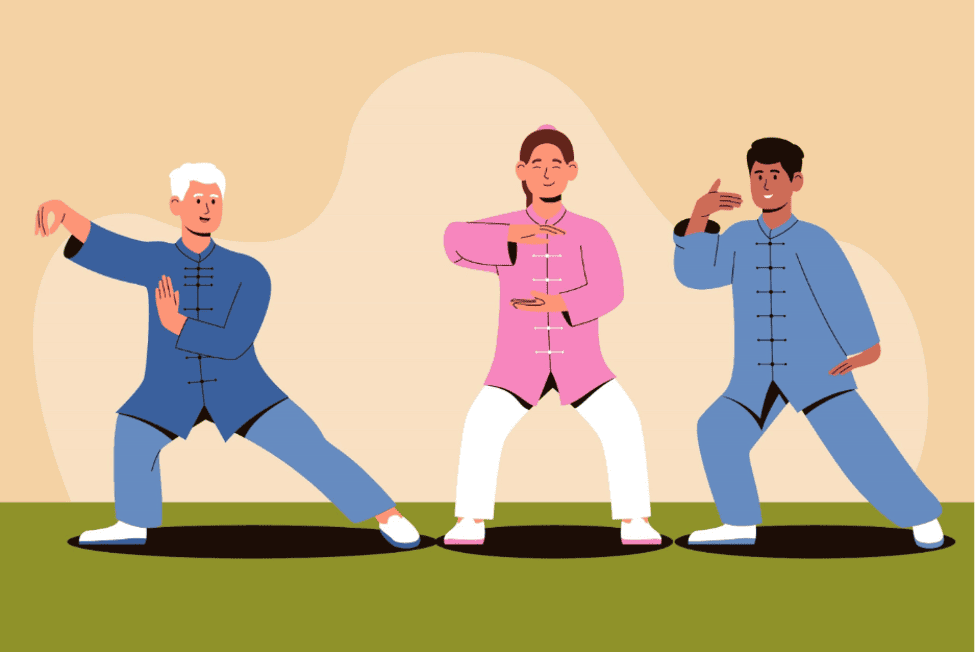
Proper stretches for lower back relief must enhance strength with flexibility. Exercises that engage the core and spinal muscles offer a more sustainable outcome than those that only target stretching.
Consequently, muscular stamina is enhanced, which helps in maintaining spinal stability during day-to-day activities, e.g., lifting or standing up. Such a combination of both strength and flexibility is represented in the practices of Tai Chi, Pilates, and yoga.
Tai Chi uses slow and gradual moves that enhance balance and flexibility. Moreover, regulated breathing and stress management used in Tai Chi can decrease muscle tension associated with heightened pain response.
Likewise, Pilates and yoga strengthen inner-most core muscles that stabilize the spine and increase the range of motion. These exercises improve flexibility when they are performed 15 to 30 minutes three times a week without overworking the muscles.
In the long term, such a balanced approach strengthens the control of the posture and minimizes lower back strains that repeatedly occur.
2. Knee-To-Chest Stretch for Tension Relief
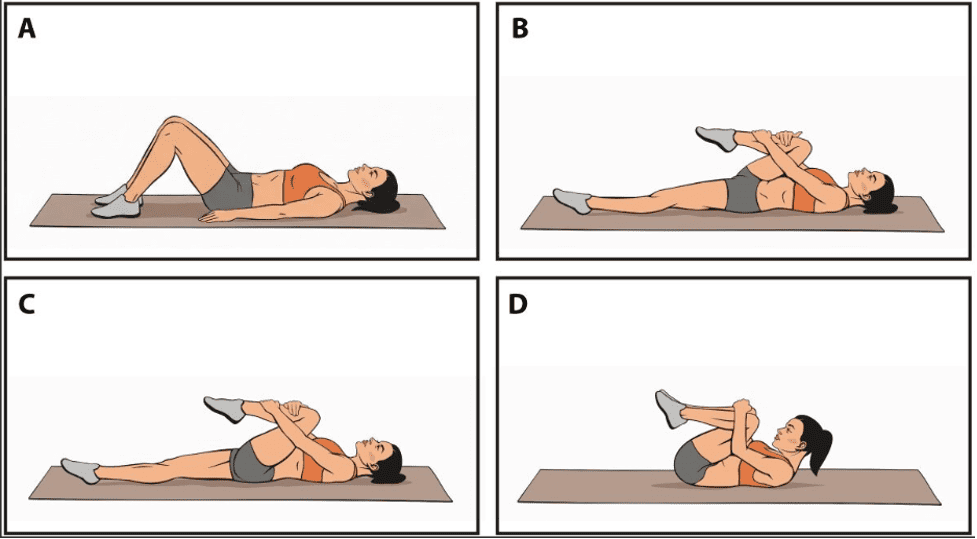
Knee-to-chest stretch specifically targets the straight lower back and hip muscles, which contract due to extended sitting. Since it is a gentle way of decompressing the spine, it can be effectively used in the mornings or after spending long hours at the desk.
To perform this stretch correctly, follow this controlled sequence:
- Lie flat on your back with knees bent and feet flat.
- Gently press your lower back toward the floor.
- Pull one knee toward your chest using steady pressure.
- Hold for 15–30 seconds while breathing evenly.
- Lower slowly and repeat on the opposite side.
- Optionally, draw both knees in together if comfortable.
As a result, this stretch decreases muscle tension and recovers flexibility. Daily repetitions enhance the circulation, and stiffness is reduced.
3. Supine Rotational Stretch for Mobility
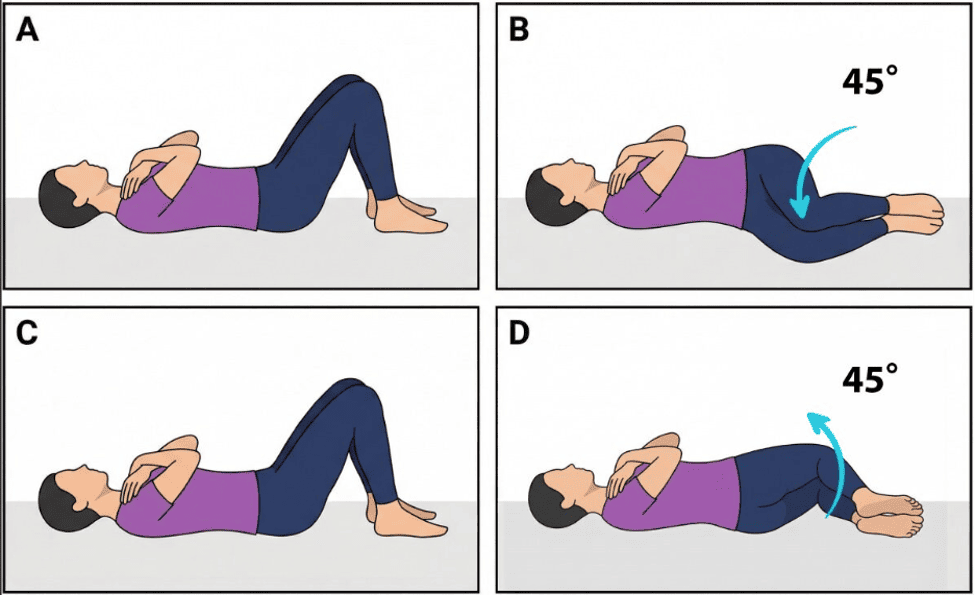
During sedentary habits, spinal rotation is usually restricted. Thus, to achieve balanced mobility, there is a need to restore controlled twisting movement.
To include spinal rotation in your daily habit, follow the steps below:
- Lie on your back with knees bent and feet flat.
- Slowly roll both knees halfway to one side.
- Keep shoulders relaxed and grounded.
- Hold for 15–30 seconds without forcing the stretch.
- Return to the center and repeat on the opposite side.
This controlled rotation improves movement between spinal segments. Moreover, it relieves tension on both sides of the body. With the increased flexibility, daily twisting motions become less restrictive and easier.
4. Cat Stretch for Spinal Control
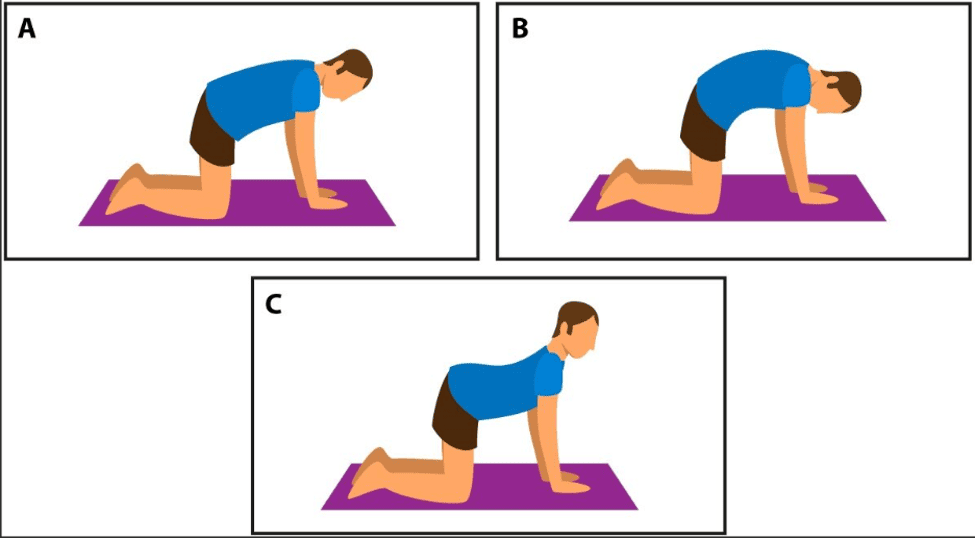
The cat stretch promotes active spinal movement through flexion and extension. Because it moves the spine through opposite ranges, it enhances flexibility while maintaining muscular engagement. In addition, this controlled alternation improves awareness of spinal positioning and encourages smoother transitions between movements throughout the day.
Do the stretch in the following order:
- Position yourself on your hands and knees with your wrists under your shoulders.
- Slowly arch your back upward while lowering your head.
- Hold for 15–30 seconds while breathing steadily.
- Reverse the movement by lowering your abdomen and lifting your head slightly.
- Pause again before returning to neutral.
As a result, spinal coordination improves, and stiffness decreases. Over time, this movement enhances posture awareness, reinforces core activation, and supports balanced mobility in the lower back during everyday activities.
5. Seated Lower Back Rotational Stretch for Desk Breaks
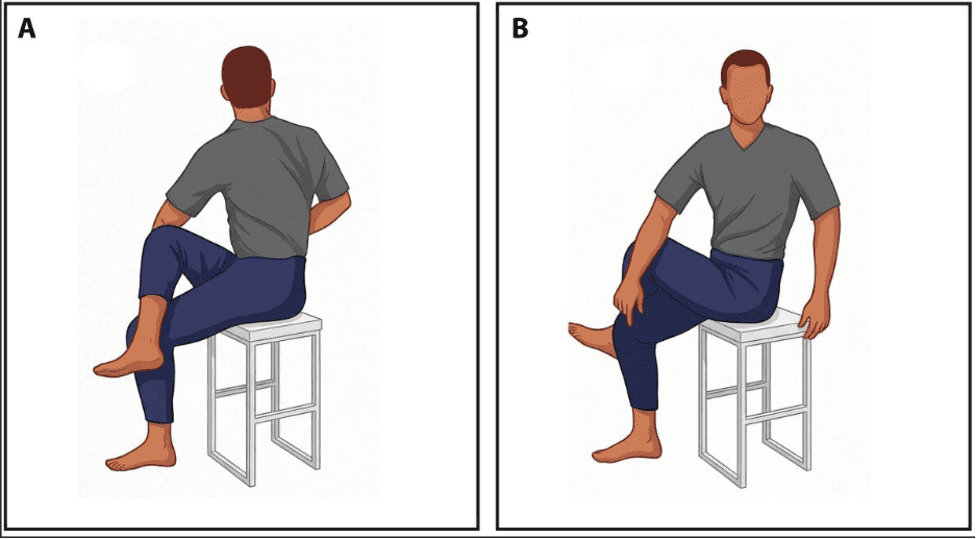
Extended sitting restricts spinal motion and increases tension. Therefore, incorporating brief seated stretches throughout the day can prevent stiffness.
To relieve tension while seated, apply the following method:
- Sit upright on a stool or armless chair.
- Keep feet flat and spine tall.
- Cross one leg over the other.
- Brace your opposite elbow against the raised knee.
- Twist your torso toward the crossed leg in a slow, controlled motion.
- Hold for 15–30 seconds, then repeat on the other side.
Consequently, this stretch restores rotation and reduces strain caused by prolonged sitting. With consistent practice, posture improves, and lower back discomfort becomes easier to manage.
Bottomline
Lower back health depends on consistent mobility and muscular support. These five daily habits address stiffness, limited rotation, and weak core stability through structured, controlled movements.
Moreover, when strengthening and stretching work together, the spine receives better support, and tension decreases more effectively. Even brief sessions practiced regularly can improve flexibility, posture, and comfort during daily tasks.
By integrating these focused stretches into your routine, you create steady progress rather than temporary relief. Over time, this consistency builds resilience in the lower back and supports smoother, pain-free movement in everyday life.
